Friday, May 15, 2026

Building A Die Filer From Scratch

May 15, 2026 0
Building A Die Filer From Scratch

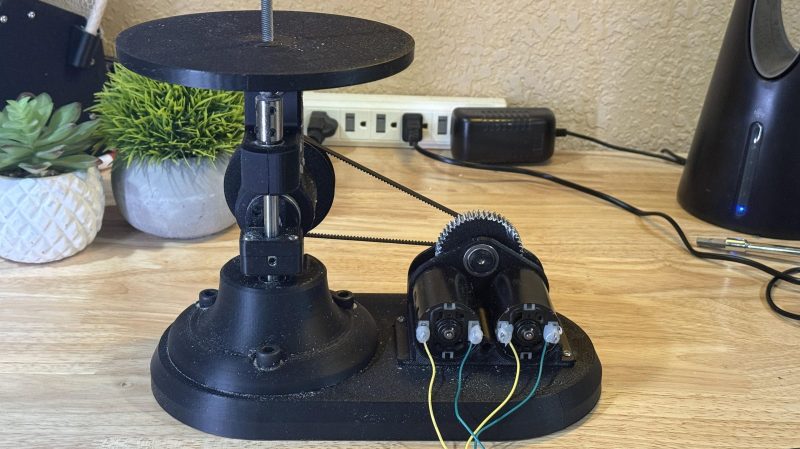
A die filer is a useful tool to have if you find yourself filing parts on the regular. It’s basically a machine that reciprocates a file up and down for you so you can focus on filing the part to your desired dimensions. They’re not commonly manufactured these days, so [Richard Huberjohn] set about building his own. 

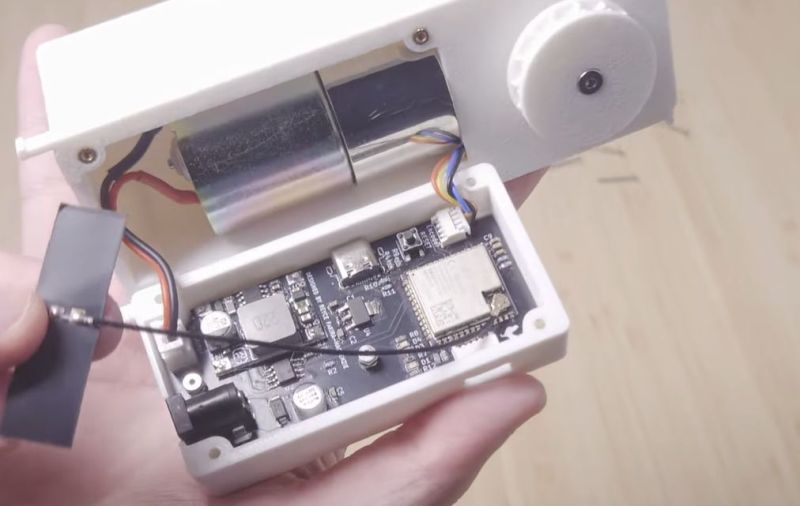
This die filer relies on a simple mechanism to turn rotational motion from a motor into reciprocating linear motion in the vertical plane. A rotating shaft is connected to a crank, which turns a pin in a slotted carrier attached to a linear bearing. As the wheel turns, the pin slides in the carrier, driving it and the linear rod up and down in turn. Attach a file to this, and you have a working die filer. In this case, the rotating shaft is driven by a pair of DC brushed motors, with output stepped down via a gearbox and then a short belt drive. Speed is varied with the aid of an off-the-shelf controller.

If you’re regularly filing small parts, a build like this could speed your work to a great degree. We’ve featured other DIY machine tool builds before, too. If you’re cooking up your own gear for the home workshop, don’t hesitate to let us know on the tipsline!

Mod this IKEA Lamp into Smart Lighting For Not A Lot

May 15, 2026 0
Mod this IKEA Lamp into Smart Lighting For Not A Lot

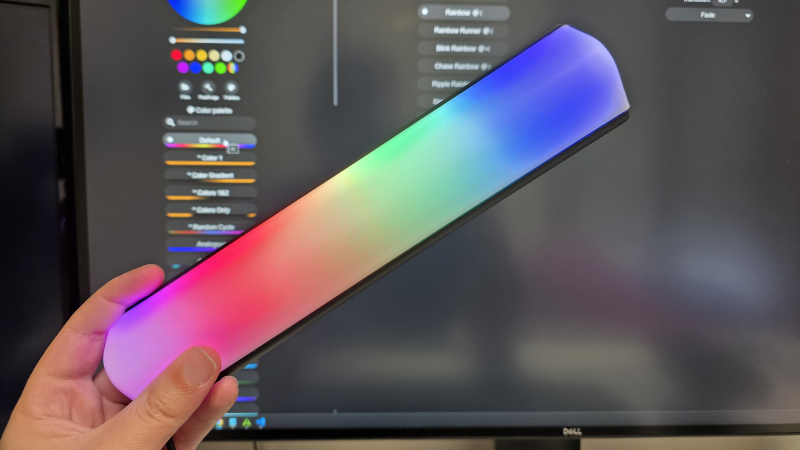
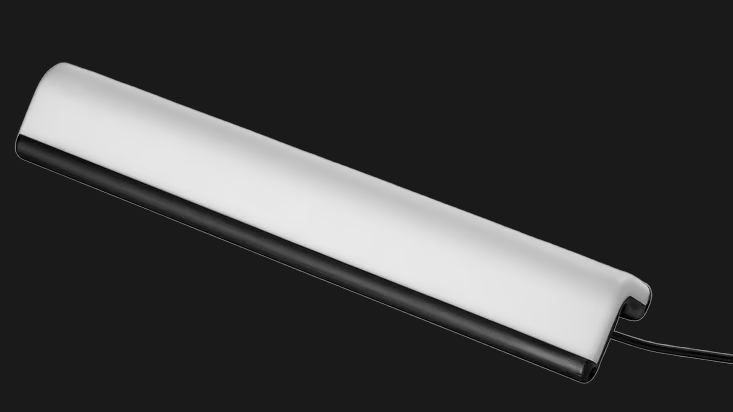
The IKEA SKAFTSÄRV is an economical LED accent lamp, but while highly affordable it has only fixed lighting options. [simoneluconi] shows how it can easily be turned into a fully-configurable, WLED-connected, WiFi-enabled RGB lamp with little more than an ESP32-based board.

A thirty-LED lamp with integrated diffusor and stand can be had for surprisingly cheap. Add an equally-economical ESP32 board and it becomes a whole lot more.

To do this, the control board of the lamp gets replaced with an ESP32-C3 Super Mini board. Control and automation comes from WLED, open-source software that offers flexible automation and control for LED lights with a wide range of features, including native Android and iOS apps.

Modifying the SKAFTSÄRV lamp is fairly straightforward, but opening the unit does require breaking some glued seams to get inside. Once that’s done, the replacement board fits nicely into the housing and the unit can be closed back up. As far as WLED is concerned, the new lamp has 30 LEDs, WS281x type, GRB color order.

The end result is a stylish accent lamp with built-in diffusor and mount that can be controlled over WiFi with all the features WLED brings, such as easy integration with Home Assistant.

This isn’t the first time IKEA’s LED lighting has been given a powerup. Their pixel-style LED wall-mounted OBEGRÄNSAD, which displays a few canned animations out of the box, got considerably enhanced with a new controller.

Thanks [Crash] for the tip!


Hacking Hard Drive Firmware

May 15, 2026 0
Hacking Hard Drive Firmware

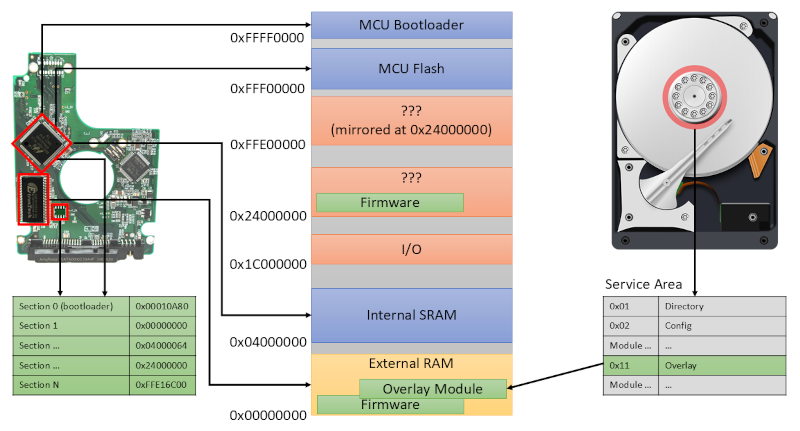
You probably flash new firmware on a variety of devices regularly, even though that’s rare for non-technical types. But what about your hard drive firmware? Most of us don’t want to touch our operating drives, so unless you are dealing with surplus drives or have a special project in mind, you may not think much about the firmware running your spinning rust storage. [I Code 4 Coffee] uses hard drives in an unusual way to exploit Xbox 360s, and wound up reverse engineering some drive firmware with an eye to making changes.

The analysis started with three hard drives and an SSD. Looking for people who’ve done similar work wasn’t as productive as you might think. There isn’t much call for modifying hard drive firmware, and what data there is can be outdated.

One thing that was available was firmware dumps taken with a PC-3000 data recovery tool. What follows is a deep dive down the hard drive rabbit hole. There are backdoor vendor commands and connections to the diagnostic RS-232 port on some drives. You can find the technical artifacts on GitHub.

We learned a few things, and we bet you will too. Another way to get into the hard drive’s firmware is via JTAG.


Thursday, May 14, 2026

RS-485 Sprinkler Control: Scaling Irrigation Across the Farm

May 14, 2026 0
RS-485 Sprinkler Control: Scaling Irrigation Across the Farm
RS-485 Sprinkler system
Building your own sprinkler system controller isn’t that difficult on the face of it, but what happens when your system starts to grow, adding more distant areas? To tackle this, [Vinnie] leveraged the tried-and-true RS-485 differential pairs to communicate reliably with ever-more-spread-out valves on his farm’s irrigation system.

The system uses a Raspberry Pi to control when each valve turns on and for how long. It does this via a custom RS-485 valve master board, whose code and design files are on GitHub. The master board communicates with the Pi over I2C and issues RS-485 commands while controlling the 12V line to the valves. Toggling the 12V supply is a smart move it lets [Vinnie] save power by not keeping the valves energized when idle.

At the valves themselves lives a valve node board (also on the GitHub repo). Each node has a unique address so it knows when its name is called to open or close a valve. The valves are latching solenoids, ideal because they don’t require constant current during the watering cycle. The Valve Nodes also support their own protocol to report state, firmware version, and allow in-situ configuration.

Be sure to head over to [Vinnie]’s project page and check out all the work that went into this great DIY irrigation control system, along with the thoughtful boards and tools he made to help others set it up. This is a welcome addition to the sprinkler-related projects we’ve seen.


ChargeCap Helps Your Batteries Last Longer By Limiting Charge Level

May 14, 2026 0
ChargeCap Helps Your Batteries Last Longer By Limiting Charge Level

If you want to maximize the life of your lithium-ion batteries, proper storage voltage is critical. That is, don’t store them empty, and don’t store them completely full either. “Almost fully charged” is a sweet spot for occasional-use devices. Sadly, this is easier said than done. While many devices use integrated rechargeable batteries these days, most provide no method of limiting charge level. That’s where [DaverDavid]’s ChargeCap comes in.

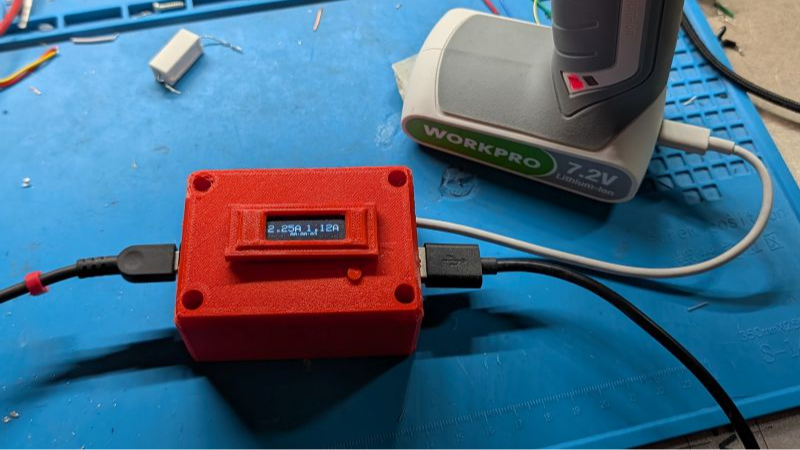
By sampling charge current and disconnecting when it drops to 50 percent of peak, charging is reliably stopped when the target device is 80 to 90 percent charged, regardless of cell count or capacity.

ChargeCap sits between a USB charger and target device, disconnecting when it detects that recharging is 80 to 90 percent complete. This is particularly useful for maximizing the cell life of devices that see only intermittent use.

The way ChargeCap does this is clever, and relies on the fact that all lithium-ion charging curves look the same regardless of cell capacity or cell count. Charge current remains at pretty much the same level for most of the charging process, but tapers off quickly (and in a linear fashion) as cells approach their maximum capacity. That’s because charging a battery is a lot like blowing up a balloon: the first breaths are easy, but once the balloon fills out, every breath needs to push harder than the last.

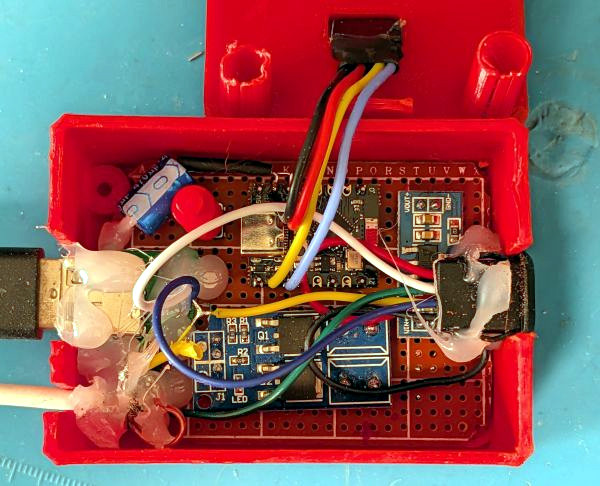
ChargeCap works by sampling the peak charge current at the beginning of the charge cycle, then detecting when it drops below 50 percent of peak, at which point charging is stopped. The result is a device that reliably charges to 80 to 90 percent of capacity, and no more. ChargeCap uses an ESP32-C3 and a small OLED display that, as a nice touch, inverts colors to signal charge completion. Design files and code are at the GitHub repository.

Lithium-ion cells are fantastic devices, so flesh out your knowledge by reading [Arya Voronova]’s primer on designing them into your own projects, or a more in-depth explanation of how they work.


Ask Hackaday: Do We Need a 21st Century Calculator?

May 14, 2026 0
Ask Hackaday: Do We Need a 21st Century Calculator?
The HP-41C analog on my phone gives the right answer.

Three resistors in parallel: 4.7 k,Ω 22 kΩ, and 3.3 kΩ. Quick! What’s the equivalent value? You can estimate it, of course, but if you want the actual 1.8 kΩ (approximately) answer, you probably reached for some kind of calculating aid. I have two slide rules on my desk, and plenty more a few steps away, but I don’t use them much, honestly. I have a very old HP-41C — arguably the best calculator ever made — but I am usually afraid to use it as it is almost 50 years old and difficult to repair. I also have an HP-28S on my desk, a replica HP-41C, and a few others in desk drawers. There are also dozens of calculators on my desktop computer, my phone –including the official HP Prime app — and the web browser.

I often see newer calculators from HP, like the Prime G2, or “new” HP-like calculators like the ones from SwissMicros, and think I should pick one up. Well, technically, HP licensed their calculators to Moravia, so even a “real” HP calculator isn’t from HP anymore. But, in the end, I always realize that my need for a physical calculator is so diminished that I can’t justify buying anything new, and I can barely even spring for a $10 one at the thrift store unless it is a real collectible.

Mind you, I’m not talking about RPN versus algebraic. I could say the same thing for TI, Casio, or Sharp calculators. I just don’t know why I need one anymore, even though I still, for some strange reason, want them.

The Prime seems impressive, if I could ever find time to finish reading the manual.

For the record, I did use an HP-41C to check the resistor math, but it was in the form of an app on my phone, not a real calculator. On the same computer I’m writing this on, I have HP-41C emulators, the Prime emulator, and a bunch of other calculators. Yet I still pick up my phone and use the familiar key layout of the HP-41C. I don’t know why. The replica 41C, unfortunately, has a landscape-oriented keyboard, so while I like it, it doesn’t satisfy my finger’s muscle memory.

Which leads to this Ask Hackaday. Do you use a calculator? Why? If you don’t, do you use a fake calculator on your phone or computer? Or do you just send your math to Google or Wolfram? I suspect some of the answer will be generational. I was in high school before calculators started showing up in schools, but they took over quickly.

There is something satisfying about having a purpose-built device to do your math. No long boot sequence. No switching apps. No messages coming in while you are typing in numbers. For the ultimate convenience, you could wear it on your wrist. The Apollo mission that docked with a Russian spacecraft carried an HP-65, and nine early Space Shuttle missions used an HP-41C. But even astronauts now don’t have a standard-issue calculator. Pilots sometimes use electronic E6Bs, but many still use the mechanical version.

Of course, I do collect slide rules, so maybe I just need to accept that calculators are yet another tech relic to collect. But someone is still buying them. I’d like to be one of them.

With the current state of tech, you can easily build your own calculators. There are several options.


Automating Window Shades With Home Assistant

May 14, 2026 0

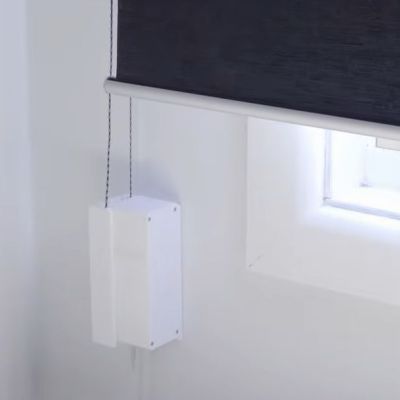
Most people love window shades, but many dislike the tedium of having to open and close them over the course of each day. While there are automation options here, if you’re in a rental place like [Rooster Robotics], then you’d prefer something less intrusive, as well as less cloud-bound. This is basically why he opted to build his own solution from scratch to open and close roller shades via Home Assistant.

The comments to the video helpfully point out that technically his point about there not being commercial options with a forced remote account ‘feature’ is false, as the Aqara Roller Shade Driver E1 for example is just a regular Zigbee device which can be used with a wide range of home automation ecosystems. That said, it’s always nice to have your own device that you fully control.

Of course, these devices are deceptively simple, as you still have to somehow know how far open the curtain is, which is also useful if you just want to open the curtain a certain amount. The other issue is the need to have the motor parallel with the wall unless you enjoy having a big wart sticking out from the wall.

Solving the first issue was attempted with a Hall effect sensor, and the second with angled gearing. With some refinements this led to a functioning design, allowing the development of a custom PCB with an ESP32-S3 module for WiFi control. In the final design the Hall effect sensor and magnets were replaced with an AS5600 magnetic rotatory position sensor that requires just one magnet and offers a much higher resolution.

Currently the design files are not available, but [Rooster Robotics] has indicated that they are looking at open sourcing the files in the future.


Wednesday, May 13, 2026

How Did Apollo Separate?

May 13, 2026 0

If you’ve watched a Saturn V launch, you’ve probably seen how a large rocket will often jettison a stage on the way up. There are several reasons for this — there is no reason to haul an empty fuel container, for example. However, you can probably imagine how the separation works. You release something — probably explosive bolts — and gravity pulls the old stage away from you as you climb on the next stage’s engines. But what about on the way back? The command module drops the service module before reentry. [Apollo11Space] has a video explaining just how complicated that was to pull off. You can watch it below.

The main problem? The service module has almost everything you need: oxygen, a big engine, fuel, and electrical generation capability. If you’ve ever seen a real command module, they are tiny. Somehow, you need to get the command module prepared to be on its own for the amount of time it takes to land, and get the service module safely away.

In orbit, gravity isn’t a big help in pulling the two pieces apart. For that reason, the mission design called for a very specific orientation for the separation. There are a number of other details you might not have known about.

Landing Apollo 11 successfully depended on some spy tech. We imagine the separation of the LEM had some similar issues, although even the moon’s weak gravity would have helped.


FreeCAD 1.1 Tutorial, For Beginners Who Like Clear Instructions

May 13, 2026 0

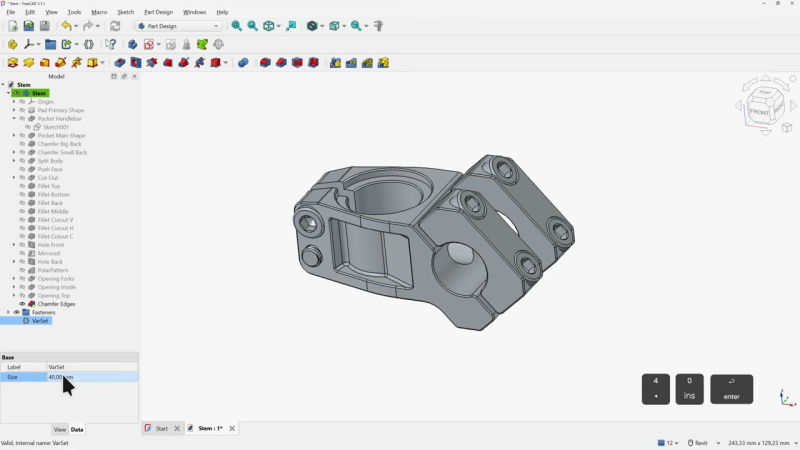
If you’ve been interested in FreeCAD but haven’t known where to start, here’s a wonderful video tutorial for FreeCAD 1.1 by [Deltahedra] aimed squarely at how to model a 3D part from scratch while also following best engineering practices for part design. It focuses on a concise and meaningful workflow that respects your time and doesn’t make assumptions about skill level. It even starts by taking a few moments to explain how to navigate the interface, a courtesy many will appreciate.

FreeCAD can do quite a lot, so a tutorial that focuses on a specific yet broadly-applicable task with a clear context is a great way to narrow the scope into something manageable, and be comprehensive without getting bogged down in minutiae. [Deltahedra] does this by exclusively using the part design workbench, demonstrating what to do to make a part step-by-step, and showing common mistakes that can happen and how to fix them if they occur. Beyond that, it’s left up to the curious hacker to delve for themselves into what else FreeCAD has to offer.

Since 1.1 is (at this writing) the latest stable release, one can also be confident that the tutorial will match the user interface and features one sees on their own screen. After all, it can be frustrating to attempt to follow a tutorial only to find out things are a few versions behind and nothing is where one expects it to be.

Best practices aren’t just fussy rules about how to do things, and [Deltahedra] demonstrates this by showing how certain procedures just plain make more sense when designing shapes. Our own Arya Voronova has also shared best practices for FreeCAD, so check that out for some added perspective. You’ll be wielding FreeCAD in confidence and comfort in no time.

Thanks for the tip, [Vik Olliver]!


Custom Mainboard for PS2 Portable

May 13, 2026 0
Custom Mainboard for PS2 Portable

As time marches on, the retro gaming community gets more and more access to older systems. This is partially a product of modern computing having much more power to emulate more demanding systems, but also because many in the community have spent more time with their favorite systems. Such is the case for [tschicki] who has spent considerable time and effort reverse engineering the Playstation 2 to come up with this custom mainboard for a handheld version that still uses some of the original chips from the console.

This Playstation 2 handheld console is designed almost completely from the ground up, not just including the impressive main board but also its modernized features, including USB power delivery handled by an RP2040, digital video output, support for modern storage media like SD cards, a customized boot ROM, and upgraded audio. The DualShock 2 controller is also implemented within the handheld, and the case itself is designed to be 3D printed. It’s an impressive effort which preserves the original feel of the console without relying too much on ancient hardware for everything.

Before jumping in to building one yourself, though, [tschicki] cautions that this project is not for the faint of heart, as it requires some specilized tools and a high degree of skill, but for those still wishing to attempt this build all of the instructions are available on the project site. For such a popular console it’s no surprise we’ve seen plenty of other handheld PS2s before, from this one which uses an original PS2 mainboard to this one we featured way back in 2010.

Thanks to [raz] for the tip!


Y-zipper: 3D Printing Flexible–Rigid Transition Mechanism for Rapid and Reversible Assembly

May 13, 2026 0
Y-zipper: 3D Printing Flexible–Rigid Transition Mechanism for Rapid and Reversible Assembly

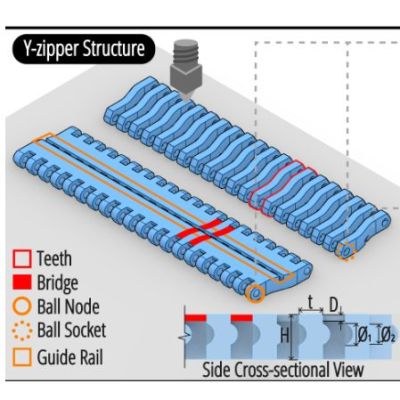
Along with Velcro, zippers have become an integral part of every day life, being a quick and easy way to usually temporarily join fabric together. Which isn’t to say that you cannot do more with the basic zipper concept, including using them to turn floppy 2D shapes into rigid 3D ones, such as with the Y-zipper concept proposed and demonstrated by [Jiaji Li] et al.

Although not a fully new idea, the Y-zipper is compared with a range of similar mechanisms that do not feature the same abilities, including the standard zipper ease of zipping up, the possibility of having curved geometry and automatic actuation.

Plus there is that the Y-zipper is designed from the start to be 3Dprinted, while still following the same basic pattern of interlocking teeth that the slider mechanism alternately pushes together or pulls apart.

By modifying the basic straight design of the flat strips, the resulting zipped-up form can take on a distinct bend, as well as turn into a coil or a screw. With a demonstrated joint design it is then possible to join multiple Y-zipper rods together, which could make for an interesting alternative to traditional pop-up tent supports, for example.

Also demonstrated is the use of TPU to create compliant bridges, as well as the direct integration of fabric, to show the versatility of the technology. With the used materials (PLA, TPU) the researchers estimate a maximum viable length of about 3 meters before the printed structures begin to disintegrate.


Tuesday, May 12, 2026

Trying to Fix a GoPro Hero 10 With No Camera Input Issue

May 12, 2026 0

In the search for more exciting broken electronics to repair, [Hugh Jeffreys] bought a GoPro Hero 10 for US$100 with an apparently rather common issue of no camera input, along with a cracked display. This particular camera issue is rather obvious, with just darkness where the camera’s input should appear on the display. Since [Hugh] already needed a spare display, he figured that he might as well get an even more broken GoPro Hero 10 for parts.

Another US$40 later, [Hugh] found himself the proud owner of a second GoPro, this one being water damaged and no longer turning on. Getting to the internals requires removing the glued-in display, which is even trickier than with a smartphone. By inserting a thin blade, adding solvents and not prying, you can slowly work it loose.

With two disassembled GoPros it was now possible to swap modules. After a factory reset and firmware update had failed to fix the first GoPro, the camera module from the donor unit was inserted, but this made no difference. Amusingly, after cleaning the water-damaged unit’s PCBs, it was found to be in good working condition, so ultimately the second GoPro was repaired, leaving the ‘no camera input’ issue undiagnosed.

It’s possible that a board-level repair on the first unit can address the original issue, but without schematics this would likely entail a lot of blindly poking around, in the hope of finding a damaged MLCC or other obvious fault. There is also the possibility that this is a firmware issue, with some reporting luck mashing the report button, but others disagree.

Since [Hugh] did do the firmware reset and updating steps, and even inserted a whole new working camera module, it would seem to narrow the problem down to a board-level issue. Whatever the case may be, it’s a frustrating issue with a rather expensive device.


CRTs Are Too Mainstream, So Game on a Mechanical TV Instead

May 12, 2026 0

Aside from nostalgia, people claim to like CRTs because they’re apprehendable– the technology just makes more sense than the arcane wibbly-wobbly solid-state madness going on inside the driver chip of your new OLED. CRTs weren’t the first technology used to display moving images though, and their mechanical forebears were even easier to understand. For that reason we suppose it was only a matter of time before one of The Youths– in this case a British YouTuber by the name of [smill]–tried gaming on a mechanical television display.

The game in question was Minecraft— because of course it was, that’s the new generation’s DOOM–and the mechanical TV in question is not a priceless 1920s antique but a commercial kit that reproduces [John Logie Baird]s 1925 televisor. If you’re not familiar, it uses a flat disk– called a Nipkow disk after its inventor– with a series of holes in a spiral to demodulate a single lamp’s brightness variations into monochrome image made of scan-lines. As you might imagine, the resolution depends both on the size of the disk and its speed, so with a tabletop example you’re not going to get much– in this case, 32 holes for 32 lines. At least they’re not interlaced this time.

Getting a video signal from the computer to the LED in the televisor kit was the hard part of the hack. Aside from actually playing on the diminutive monochrome display, that is. There is a “video2NBTV” tool that can do the job, as the Narrow Band TV signal used by amateur radio enthusiasts still has the compatible timing values and modulation as what the televisor kit uses. We suspect that’s because the Televisor people used the modern NBTV standard as a starting point for their electronics, since [Baird]’s device reportedly ran 30 lines at only 5 frames per second, compared to the 32 lines at 15 FPS here.

Some of you may turn your nose up at this as a mere YouTube stunt, which is fair enough. At the same time, we cannot wait for the eventual arms race. Imagine when someone decides to go for 4K cred? Staring through a supersonic Nipkow disk makes pointing a particle accelerator at your face downright mundane. The kit [smill] used was monochrome, but if you want to repeat his antics in glorious colour, you can 3D print your own TV.


A Cyberdeck That Runs Linux…in an Altoids Tin

May 12, 2026 0

In the time Hackaday has been in existence we must have brought you plenty of projects housed in Altoids tins, as well as a sizeable number of cyberdecks. But until today with [Exercising Ingenuity]’s build, we’ve never brought you a project that combines the two. It’s a fully functional computer that runs Linux, and with its Altoids tin enclosure, looks for all the world like a miniature clamshell laptop.

Hardware wise it’s a Pi Zero with a UPS PHAT and an SPI display, but perhaps it’s arguably the home-made keyboard that really sets it apart. There’s a full-size USB port as well, and a selection of GPIOs are broken out to a header. It wasn’t all plain sailing though, the Altoids hinges needed modifying to make it close, and he driver for the SPI screen required an older version of Raspberry Pi OS. We will forgive it those foibles.

It’s fair to say we’ve not seen anything quite like this, in that there have been plenty of tiny laptops but never one as integrated as this. There’s a demo video with details of the build, that we’ve placed below.


2026 Hackaday Europe: Pre-party, More Workshops, and Everything Else

May 12, 2026 0
2026 Hackaday Europe: Pre-party, More Workshops, and Everything Else

With Hackaday Europe no more than two days away, we want to help you wrap up all of the last loose ends. And that means last-minute changes in the workshop schedule, details on the Thursday night pre-party, and more! Some tickets for the event itself, the workshops, and the pre-party (reservations required) are still available right here.

Pre-Party, Thurs May 15th

Kick off the weekend with us at the official Hackaday Europe pre-party at Soqquadro Restaurant, Piazza Era 7, 23900 Lecco, Italy. Enjoy the Italian aperitivi on the gorgeous Lago di Lecco waterfront. Your ticket includes two drinks and an array of delicious snacks. It’s the Italian way to pregame the weekend ahead. Bring a hack, or just relax and hang out. Your choice. Either way, make sure you pre-register. (On the preregistration page, scroll all the way down past the workshops.)

Workshops

Unfortunately, the Let’s Mesh workshop has been canceled, but the good news, thanks to our incredible sponsors, we’ve added two great new workshops to the lineup. On Saturday, May 16th, we’ll have Tiny Tapeout, When Code Needs a Body, and Fault Injection 101. Sunday features EchoGlow: Arduino UNO Q Workshop with the brand-new Arduino Q devices, from 11:00 AM – 2:00 PM.

Tickets and full descriptions are available at registration.

Lightning Talks

On Sunday afternoon, we’ll dedicate some time to Lightning Talks. These are short, seven-minute talks, with or without slides, on whatever interests you at the moment. If you’ve got hacks or deep thoughts to share with us, you’ll never find a more receptive audience. Register now! Talk slots are FIFO.

Thanks, and See You Soon!

If you’ve never attended a Hackaday event before, we’re excited to see you. Half the fun is the crowd that convenes. If you want to bring along a hack to informally show-and-tell, it’s a great icebreaker. You won’t have to bring food or drinks – we’ve got that covered all weekend.

If you’re an old Hackaday hand, we’re stoked to see you again! A first at Hackaday Europe is going to be whatever large fraction of our SAO collection fits into carry-on luggage, and a sweet-looking SAO wall made by Hackaday Superfriend [Thomas Flummer]. If you have an SAO that you’d like to add to our pile, bring it along! It’s about time for us to do a photo gallery and write-up of everything we’ve got.

And we can’t leave without thanking our broad array of sponsors who make Hackaday Europe possible:


Monday, May 11, 2026

Honda Wants to Complicate Your E-Motorcycle

May 11, 2026 0
Honda Wants to Complicate Your E-Motorcycle

If you ride a motorcycle, you know it is a bit of an art to manage the transmission on a typical bike. Electric motorcycles lose some of that. You usually just have a throttle and a brake. No transmission and, crucially, no clutch. Honda just patented a simulated clutch for those who want the old-school experience, according to [Ben Purvis], writing for Australian Motorcycle News.

This isn’t just a do-nothing lever on the handlebar. There’s haptic feedback to feel when the clutch engages. The motor responds to your actions on the lever. If you pull the clutch in part of the way, the motor loses power up to the point where there is no engine power with the clutch fully in.

Most interestingly, the software understands that when you raise the throttle with the clutch in and then release the clutch, you expect a sudden burst of torque, and it will accommodate the request.

If you are a casual driver, this may seem like a gimmick. However, according to the post, motocross racers rely on precise power control like this.

If you do your own conversion, you could probably do something similar. Or, we suppose, a new build, if you prefer.


It’s a Water Clock, Jim, But Not as We Know It — It Has Digits

May 11, 2026 0

Guess what time it is– that’s right, clock time! It’s always clock time, and when it’s clock time at Hackaday the weirder the better. So, how about a water clock that’s not actually a water clock? The water here has nothing to do with timekeeping, but is what’s driving the display. Fair to say that [Strange Inventions] is living up to the name of his YouTube channel.

You can get the idea from the header image: each digit is formed by a fifteen-segment display made up of glass bottles. A stepper-driven peristaltic pump and some membrane-pump boosters fills the bottles as needed with dyed water, while emptying is accomplished simply by having a servo dump the water into a trough. It’s an interesting, albeit messy, way to generate a display.

It wasn’t the original idea– well, the bottles were the original concept, but flipping them was not. Dumping the bottles has the advantage of not needing oodles of pumps or taking five minutes to sequentially fill and drain the bottles at each digit. The linkage to get the servo to flip all nine bottles in one go took some troubleshooting– we can relate, since the physical half of such projects usually is the hard part– but after many modifications the 3D printed mechanism worked, and we think the results are worth it.

If you’re looking for the other kind of water clock, we featured one of those before, too. This one is also of ancient style, but makes use of modern electronics. It occurs to us that if one was really, really ambitious, they could expand this [Strange] project into a very damp flip-dot style display.


This Credit Card Computer Follows All Dimensions

May 11, 2026 0
This Credit Card Computer Follows All Dimensions

A computer the size of a credit card is nothing new. There have been many single-board computers following the familiar dimensions. [Krauseler]’s credit card computer is different, though. It packs an ESP32-C3, e-paper display, NFC reader, and, incredibly, a Li-Po battery into a credit card form factor in three dimensions rather than two. That’s right, this computer is only 1mm thick.

To ensure perfect compliance with the form factor, the enclosure, if that’s what it can be called, is a real NFC card with the middle cut out to take the electronics. The PCB is flexible, and the battery is the thinnest available. The e-paper display is an ultra-thin, flexible variant. A display connector would have been too thick, so a very fine wire-and-solder job was required.

On its own, an ESP32-C3-based computer with an NFC reader and an e-paper display would be a pretty cool project, depending on what software was on it. This one, however, redefines the term “credit card-sized.”

It’s not the first piece of electronics we’ve seen that tries for the full credit card format, but it’s certainly the only one so far to slim down to 1 millimetre.

Thanks [Joey] for the tip!


Want Driving Simulator Feedback? Make The Robot Do It

May 11, 2026 0

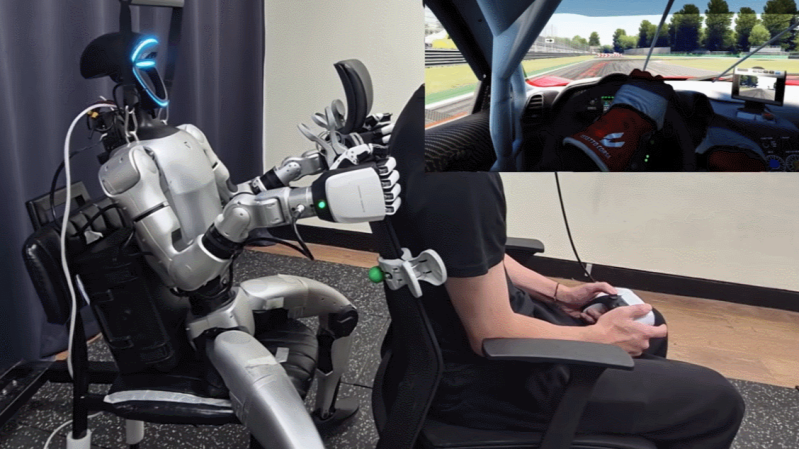
Humanoid robots are a thing now, and here’s an interesting research project that explores using one as a form of haptic media. Specifically, using a humanoid robot to move a chair while one plays a VR driving simulator.

Here’s how it works: a Unitree G1 robot sits behind a player’s chair and grasps it with its hands. Spherical markers on the chair help the robot’s depth camera know the chair’s position, and real-time G-force signals fed from the simulator (Assetto Corsa, running on PC) tell the robot how much and in what direction to shift the chair to match in-simulator events.

While a humanoid robot (especially one equipped with articulated, human-like hands) makes for an awfully expensive force feedback chair, this approach is interesting because it specifically explores using an already-existing humanoid robot as a general-purpose device. It sits in a chair, looks with its camera, grasps with its hands, and moves the player’s chair in response to game events; no hardware modifications required.

So how well does it work? Pretty well, apparently! Participants found the synchronized motion feedback accurate and highly enjoyable, although it does seem like there were some rough edges. Some testers reported that the sustained motion and constant vibration were tiring, and in some cases seemed to worsen VR sickness.

Still, using a robot in this way seems to be a conceptual success and showcases the potential of humanoid robots as flexible, general-purpose devices. We’ve seen a robot used to provide interactive force feedback in VR before, but a driving simulator makes for a pretty fun demonstration.

The video is embedded below, and for more information, check out the team’s research paper.


Sunday, May 10, 2026

Binaural Microphone on a Budget

May 10, 2026 0

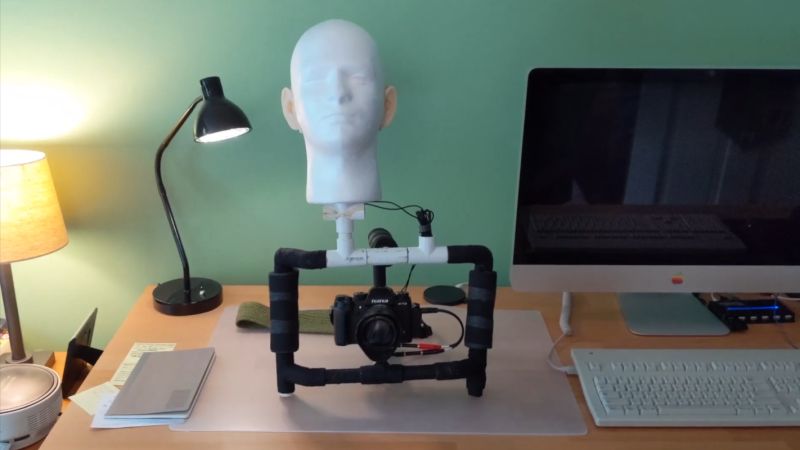
For as many speakers as someone can cram into a surround sound system, humans still (generally) only have two ears to listen to those sounds with. This means that, for recording purposes, it’s possible to create incredibly vivid three-dimensional sounds with just two microphones, provided that there’s an actual physical replica of a human ear attached to each microphone. This helps ensure that all the qualities of the sounds are preserved in a way a real human would experience them, and as [David Green] demonstrates, these systems don’t need to be very expensive.

This build doesn’t just use models of human ears for recording sounds through. The silicone ears are mounted on a styrofoam mannequin head as well, which provides some sound isolation between the two microphones, much like a real human head. The ears are mounted in appropriate locations with the microphones installed inside, and the entire microphone apparatus is positioned on a PVC rig with a camera so that binaural audio will be recorded for anything [David] points it at.

Although he had some issues interfacing two microphones using 19th-century technology instead of soldering everything together, the build still eventually came together, and only for around $70 USD. However, this build is a bit dated now, so prices may have changed by now. It’s still a great way to produce realistic stereo sound without breaking the bank, but it’s not the only way of getting this job done.