Showing posts with label Politics. Show all posts

Saturday, August 1, 2026

Open Source Stream Deck Targets Flexibility

August 01, 2026 0
Open Source Stream Deck Targets Flexibility

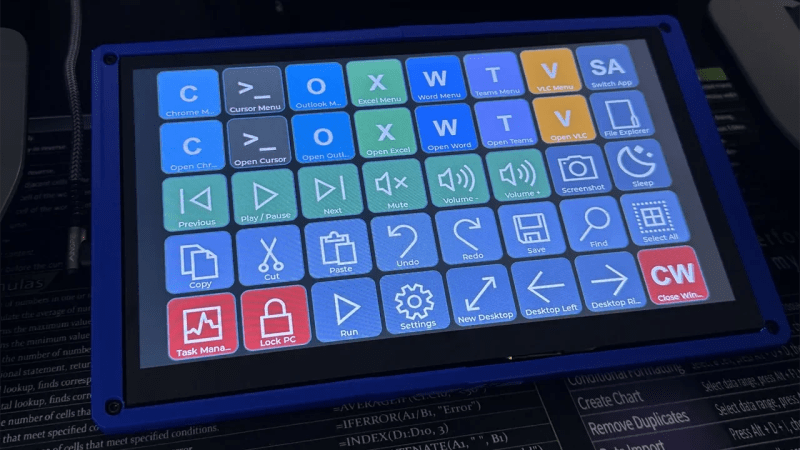
Stream decks are very useful when you’re live on camera and you need to hit some complicated macro at a glance. However, there is sometimes a perception that commercial options are a touch expensive for what they are, an attitude which has spawned many DIY builds. [Fady Faheem] has developed just such a device of his own.

Named Stream32, the build is intended to be simple to understand and adapt to one’s own individual workflow. Putting one together is as easy as buying a display, hooking it up to an ESP32, flashing the firmware, and then adding pages of shortcuts as desired. [Fady] has designed the firmware to be flexible with regards to screen choice — currently, it can be set up for a 4″ Waveshare LCD or a nice roomy 10.1″ display from Elecrow. Since it’s open source, adapting to a wider range of displays is a potential exercise for the builder.

The great thing about custom stream decks is you have all the freedom in the world to customize them to your own specific setup. Play with the code, the functionality, the visual layout—all to suit your own needs. If you’re working on your own custom hardware, be sure to tell us on the tipsline.

Browser-based 3D Editor Covers The Basics While Staying Local

August 01, 2026 0
Browser-based 3D Editor Covers The Basics While Staying Local

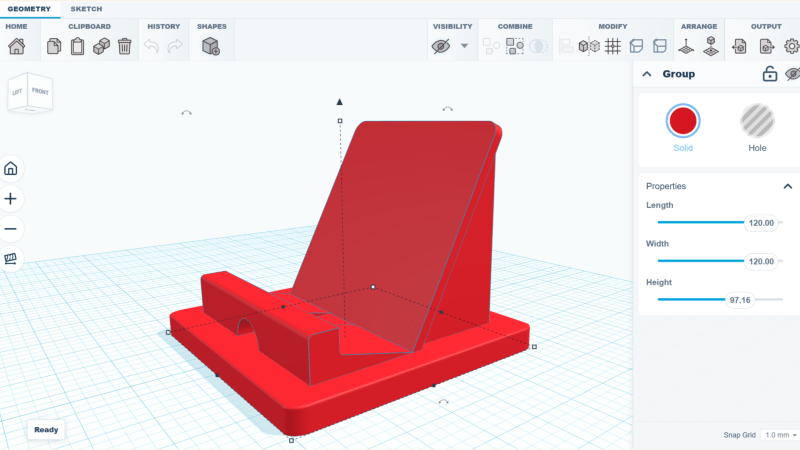
Got an idea and want to make a simple 3D model, but don’t want to install a full-fledged CAD modeling suite and queue up a few hours of tutorial videos? Check out SketchForge, a 3D modeling program that runs locally in one’s browser without any need for an account, or external services.

SketchForge takes a more WYSIWYG approach to 3D modeling by making it easy to put an object together with primitive shapes, and making it extra easy to specify dimensions and align parts with one another. There’s also a sketch feature that makes it easier to create more complex shapes by making a 2D drawing, then extruding or revolving it into a solid. We like that it has STEP format export as an option, making it easy to import your creation into another CAD program of your choice later. Most 3D printer slicers natively support the STEP format nowadays, too.

It’s a bit reminiscent of Tinkercad in concept, but entirely local. It’s still new, but there’s a demo online that gives a good idea of its capabilities if you’d like to give it a spin.

We’re reminded of CaDoodle, another project that takes the “Tinkercad, but local” approach but as a standalone executable, instead of browser-based.


Friday, July 31, 2026

Tiny Desktop Robot Has Radar

July 31, 2026 0

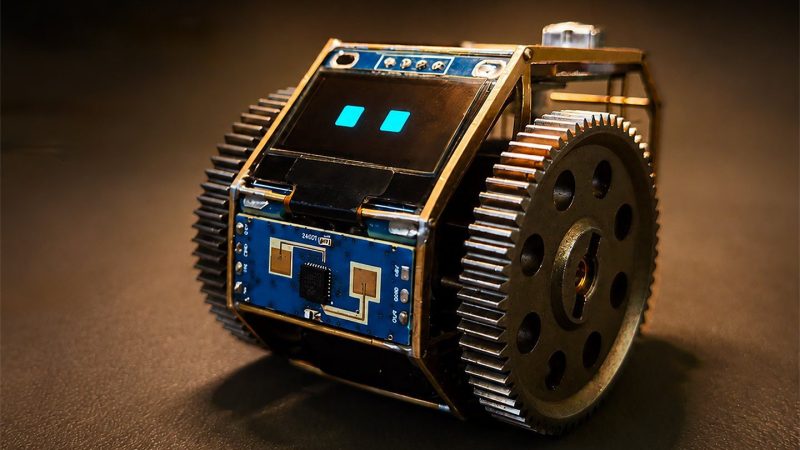
One thing our futuristic world is largely lacking in is droids and robot companions and the like. [solitary dev] is helping to rectify that problem by building a little robot called TongDou.

As [solitary dev] tells it, TongDou is a “tiny open-source desktop gremlin.” An ESP32-S3 serves as TongDou’s brain, buried inside a tasteful brass tube chassis. An OLED display is TongDou’s face, and he uses a pair of wheels driven by gearmotors for locomotion. A speaker plays back pre-recorded voice lines, while a 24GHz radar and an IMU enables TongDou to keep track of the space it’s moving through. They are publishing the design files on Github so other makers can build their own if so desired.

[solitary dev] hopes to develop TongDou into something to make a “workspace feel less dead.” It’s not dissimilar from the way studios used to use robots to liven up otherwise hackneyed movies and TV shows, and we could absolutely use some of that whimsy in the real world. We’ve featured other fun desktop companions before, too. Video after the break.


Hackaday Podcast Episode 380: 3D Printing the Rainbow, IR and IP Camera Hacks, and Americium 241 on the Loose

July 31, 2026 0
Hackaday Podcast Episode 380: 3D Printing the Rainbow, IR and IP Camera Hacks, and Americium 241 on the Loose

Elliot Williams and Al Williams got together to compare notes on the most interesting posts this week on the site. As usual, there are just too many choices, so you’ll have to settle for just the few that can fit in a podcast. The guys were excited about 3D printing — both FDM and SLA — as well as a few camera projects. Ever wanted your own starship? They do, too, and you’ll hear about it along with portable radar and more.

Want to make flexible PCBs? Fill up a carbon dioxide tank? Or play Doom via regular expressions? Tune in, and you’ll find out about those stories and more.

Follow along with the links, and as always, tell us what you think about this episode in the comments! Better still, drop us a note in the mailbag, and you might hear your question on a future episode. You can record audio or send us a message, and one of the hosts will read it on your behalf.

Direct download in IR color-corrected DRM-free MP3.

Episode 380 Show Notes:

News:

Mailbag:

  • [Marcel] wants more info about the next Hackaday Europe, and delivers a great excuse for not making it this year.
  • A note about IRCs and QSL managers from [Reese Johnson].
  • QSL Bureau
    • Drop your comments and questions in audio or text format to mailbag@hackaday.com, and you might hear it on a future podcast!

Interesting Hacks of the Week:

Quick Hacks:

Can’t-Miss Articles:


Hacking a Commercial Colorimeter to add RAL Color Code Support

July 31, 2026 0
Hacking a Commercial Colorimeter to add RAL Color Code Support

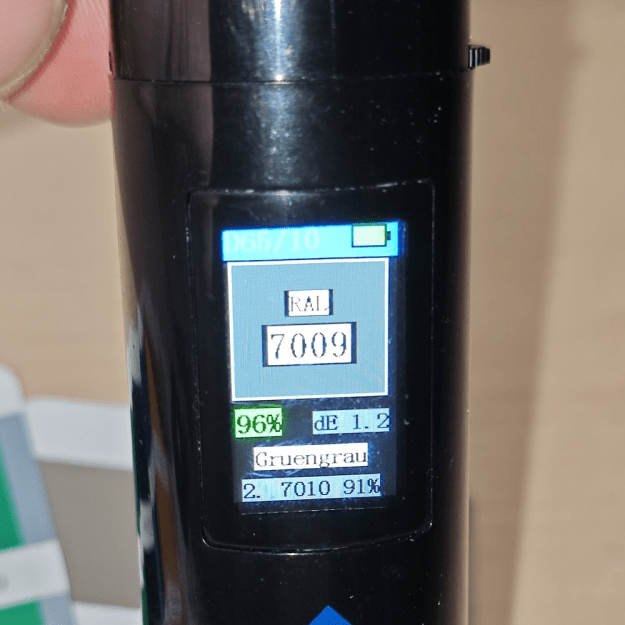
When you need to match paint colors, one of the tools you’ll reach for is a deck of reference colors. Another might be a colorimeter. But what if you want both? [hallko1234] created just that by reverse-engineering and then patching a CR4501 colorimeter.

It starts with a problem: every time [hallko1234] needed to check a color, he had to take a reading, write it down, run to the office, match it with a table, and then walk all the way back. That sounds like too much effort. The natural solution, of course, is to automate the process.

So he did. The CR4501 will happily give you its entire firmware over the debug port, after which it was time for analysis in Ghidra. Some hiccups, brickings and accidental erasure of calibration data later, he finally had a working version. The end result is a simple screen that, after every time you measure, displays the closest RAL color code and how close it is.

On the off chance someone else has the same colorimeter, he even made an online tool to install it for you.


Thursday, July 30, 2026

Best-Ever Brainstem Map Created by Indian Scientists

July 30, 2026 0
Best-Ever Brainstem Map Created by Indian Scientists

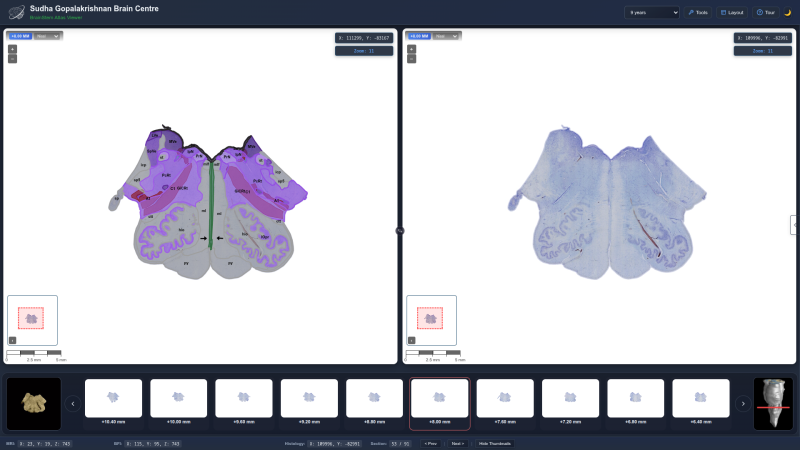
The elusive brainstem is a small, yet critical part of our brain: the slightest damage to it could prove fatal. But how it works is not fully understood today. Indian Scientists at SGBC (Sudha Gopalakrishnan Brain Centre) work to change that by producing the most detailed map of it ever seen.

Instead of more costly methods, this map was created with a high-resolution microscope. Starting with three samples, (45W fetus, 9Y and 54Y) the brain stems were imaged using MRI and BFI (Block Face Imaging), then sliced into 20/40µm pieces, imaged, annotated using in-house software and added to the dataset. From a combination of these images, MRI and BFI scans, they created a 3D model of the brainstem that you can explore in your browser.

The new research gives vital data needed for neurological research, and could help advance research on a wide range neurological diseases from Parkinson’s to Alzheimer’s.
You can find the paper here, which has not yet been peer reviewed at time of writing.

Via BBC.


Rebuilding an Obsolete IC to Save a Betacam SP Tapedeck

July 30, 2026 0
Rebuilding an Obsolete IC to Save a Betacam SP Tapedeck

Betacam is not the Betamax you may have had at home– it was a professional format that lived on into the 21st century, in the “SP” form. In many places, it would have been the last tape format in use. So it is perhaps understandable that [ldursw] decided to recreate an obsolete and unobtainable IC to save a Sony broadcast-grade editing Video Tape Recorder (VTR). Still mad, perhaps, but in a way we very much appreciate.

The Sony BVW-75 VTR had an odd flaw where the output lacked colour, unless paused with dynamic tracking off. Then colour would appear, but only in odd stripes. Clearly the chroma circuit was at fault. Some sluthing found that a sync separator IC– that separates the sync pulses that keep everything moving together, if the name didn’t give it away– wasn’t behaving correctly. More sluthing found that the chip in question was no longer available. Luckily, the concept of a sync separator hasn’t quite given up the ghost, and another part was available. It just didn’t fit, used a different voltage, and had an inverted output. No biggie! [ldursw] added a voltage regulator, an inverter, and a video amplifier chip, then after breadboard testing put them on a PCB with pins that match the original IC’s form-factor, making it a plug-in replacement.

That’s a GitHub link at the start of this article, by the way, so he’s open sourced the solution for anyone who needs a Toshiba TA7357P video sync separator. We don’t know who else needs this, but we’re willing to bet that whoever does, really needs it. On behalf of whoever that might be, we offer sincere thanks to [ldursw] for the hack, and for submitting it to our tips line.

This reminds us a little bit of a tape deck repair we featured previously, reviving another Sony format– D-1 tapes–to archive old media.


Fixing a JMicron-Based M.2 USB Enclosure That Stopped Working

July 30, 2026 0

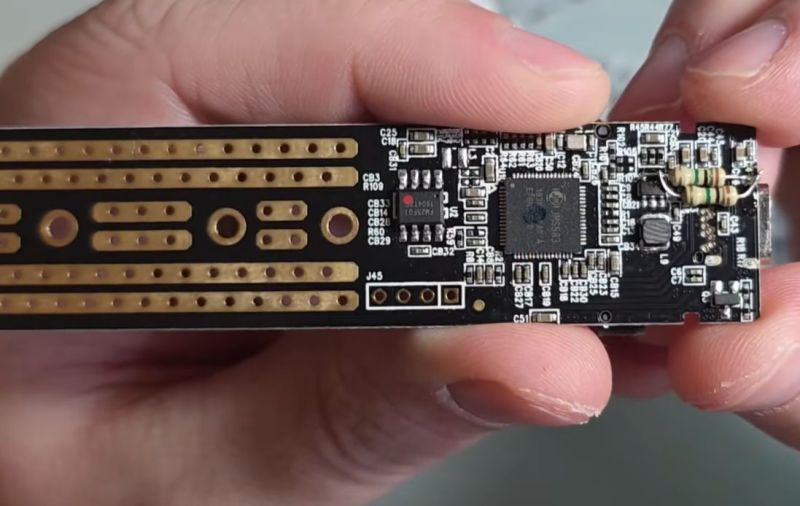
As useful as USB-to-M.2 SSD adapters are, sometimes you come across a bit of a dud. A case in point is the Orico-branded TCM2-C3 that features both an attractive clear case and in its earlier revisions a JMicron controller-based circuit that apparently degrades over time, causing erratic boot behavior. After implementing a fix a few years ago, [Mark Furneaux] can happily report that the thus fixed enclosures are still working.

These faulty board revisions feature the JMicron JMS583 controller IC, which has a 1.0V core voltage input pin. Apparently to save power, Orico designed the board to target the minimum ~-0.95V core voltage per the datasheet. Apparently due to component drift or degradation, this lower core voltage is after a while often not enough any more to start the controller, which thus translates into an unresponsive USB device and presumably some panic about lost data.

Although [Mark] doesn’t describe the fix in detail, it entails bumping up this core voltage to something closer to the nominal 1.0V, which restores functionality at the cost of presumably a measurable amount of extra heat production by said controller.

Later versions of the Orico TCM2-C3 enclosure switched from this JMicron controller to a Realtek one, which so far appears to be noticeably more reliable. Although Orico kept the same model name, the transparent enclosure makes it at least a snap to see which revision you are dealing with.


Pizza Eye Surgery Saves Hemispherical Projector

July 30, 2026 0
The newly surgerized internals

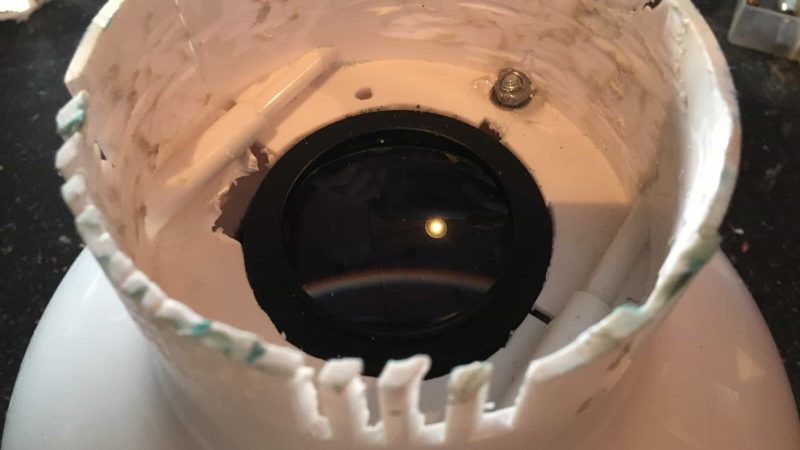
If you ever make it to DNA Pizza in San Francisco, you may feel as though you’re being watched. The Eye of the Pizza is Upon You. Or, it was, until the out-of-production and now very expensive spherical projector gave up the ghost during a power outage. It’s back, though! Thanks to proprietor [Jamie Zawinski] and some cheap, absolutely-not-supposed-to-be-in-there replacement parts.

The saga started long ago, back in 2017, when [Jamie] got ahold of a Gekkin WorldEye hemispherical projector. It looks like those were meant for the educational market, to show planets and the like, but [Jamie] instead put a big eye on it, thanks in part to work by [PaintYourDragon]. It looked great, as you can see from the demo video embedded below. There it sat, staring down patrons for nine long years, until the power company did what is known in the business as “an oopsie” and turned the WorldEye into an expensive paperweight.

Not to be deterred, [Jamie] got the cheapest projector he could find and an equally-bargain-bin fisheye lens originally meant for macro photography, and mashed them into the Gekkin case without a care for such fripperies as focal length. A little surgery later, and as [Jamie] puts it, “The Eye of Pizza is, Once Again, Upon You”. In spite of the projector being 16:9, thus not quite projecting across the whole surface of the dome and the image fuzzing a touch at the edges, the result works far better than it should for the amount of engineering that went into it. [Jamie] expects further improvements can come from tweaking the image on the software side, but it looks like the current iteration is good enough for pizza parlor decor.

We’ve featured another of [Jamie]’s hacks before, when he built a Linux payphone. Weirdly enough, this isn’t the first time the WorldEye has received a projector transplant around here.


Wednesday, July 29, 2026

Using Video Glasses As a Camera Viewfinder Is Harder Than It Looks

July 29, 2026 0

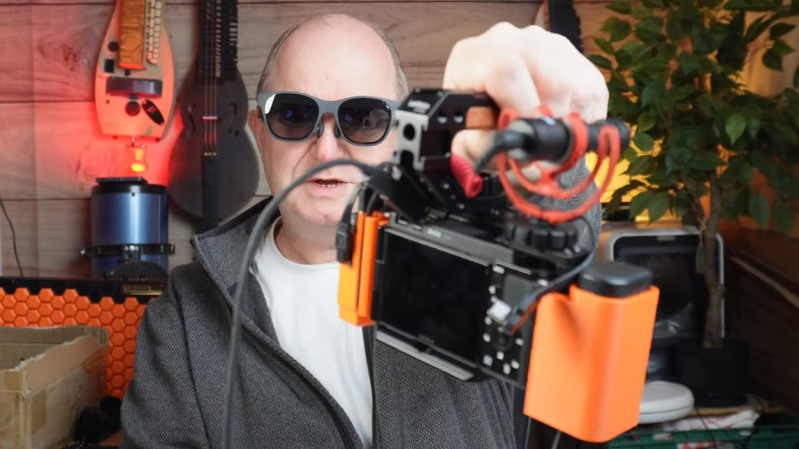
[John Dingley] has a Sony ZV-E10 camera that is excellent, but the design lacks a built-in electronic viewfinder. This means it relies entirely on its rear-mounted touchscreen for framing shots. This is troublesome because [John] often films in bright sunlight, and sometimes from a perspective other than normal eye level. His solution? Use a pair of XREAL video glasses as a handsfree viewfinder.

Cable management can be a real challenge, even if a project’s technical elements are solved.

The XREAL glasses look a bit unusual, but they can be worn and used like regular sunglasses. They accept external video and importantly, allow the wearer to see the video feed while still having awareness of their surroundings. Seems like a perfect match for the camera, but as [John] discovered, there are quite a few implementation hurdles involved.

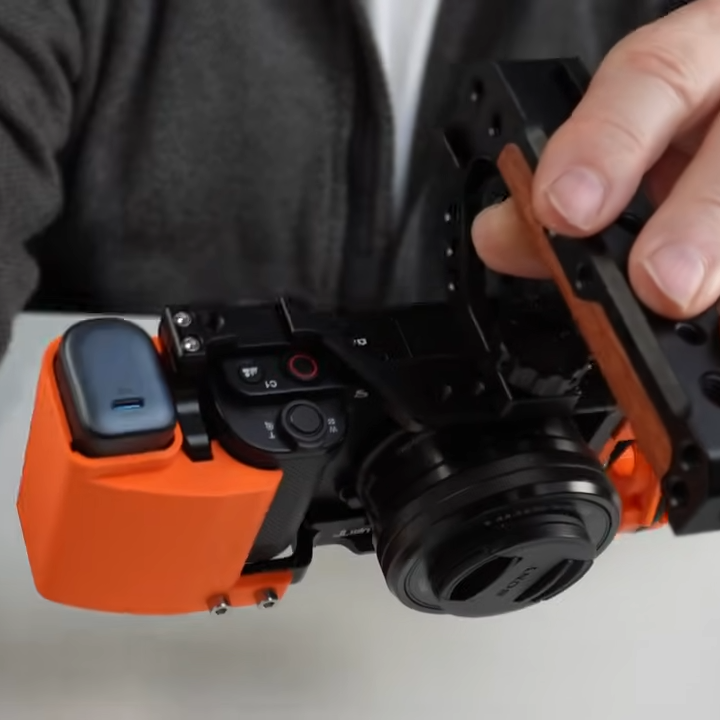
For starters, the camera and glasses do not speak the same format. The camera outputs HDMI via a distressingly fragile micro-HDMI connector, but the glasses accept video over USB-C (aka DisplayPort altmode). Connectors and cables and a converter will be involved, as well as a power bank because the glasses and converter will require a power supply. As any hacker knows, wires and connectors can eat up space very quickly.

To solve all this, [John] carefully selected off-the-shelf components chosen to minimize bulk and designed a custom camera cage to hold things cleanly without obstructing the camera’s microphone port. The end result is very tidy package that presents a single USB-C connection point between the glasses and the camera, requires no hardware modifications or soldering, and even takes the strain off the fragile connector on the ZV-E10.

The finishing touch is putting a neck strap on the XREAL glasses, allowing them to be easily donned and doffed as needed while filming. Check it out the video, embedded just below the page break.

When it comes to filming vehicles it often makes sense to film from a low perspective. The camera has a handle for this purpose, but the process is much better now that the glasses can act as a viewfinder. [John] has a soft spot for vehicles, including self-balancing unicycles or monotracks of his own design.


Scrap Pinball Parts Become Beautiful Wall Art

July 29, 2026 0

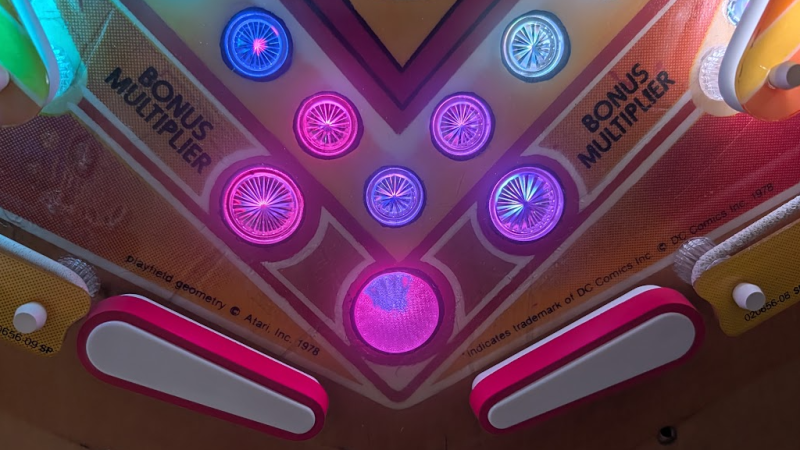
[Hans Scharler] came into a neat find recently—the playfield from a 1970s Atari Superman game. It’s the sort of thing that’s too nice to throw away, but isn’t really enough to reassemble into a viable full machine without a great deal of effort. Thus, [Hans] went a different route—turning it into a beautiful piece of wall art. 

The first step of the build was to collect missing parts; in particular, all the plastic inserts for the playfield that had been lost at some point. Everything was cleaned up and mounted, along with some modified flippers to complete the look. Custom pop bumpers were 3D printed to act as LED-lit light guides rather than as functional pinball components. [Hans] then set about dotting the board with plenty of WS2811 addressable LEDs in a bullet form factor. Everything was placed under the command of a WLED controller, and it’s synced up to [Hans’s] CheerLights MQTT server to boot. More build details are available on the Pinside post for those eager for a deeper dive.

If you come into some old-school pinball hardware that you’d like to turn into decoration, this project is a great one to study. We’ve featured a few other great pinball builds over the years, too.


FLOSS Weekly Episode 877: RCE As a Service

July 29, 2026 0

This week Jonathan chats with Francois Proulx about SmokedMeat! That’s the third in a trio of Open Source security tools from Boost Security, and this one is the red team tool to demonstrate vulnerabilities. Why are Continuous Integration vulnerabilities such a persistent problem, and what’s on the horizon that may help? Watch to find out!

Did you know you can watch the live recording of the show right on our YouTube Channel? Have someone you’d like us to interview? Let us know, or have the guest contact us! Take a look at the schedule here.

Direct Download in DRM-free MP3.

If you’d rather read along, here’s the transcript for this week’s episode.


Theme music: “Newer Wave” Kevin MacLeod (incompetech.com)

Licensed under Creative Commons: By Attribution 4.0 License


The ESP32 Gets a Web Browser

July 29, 2026 0

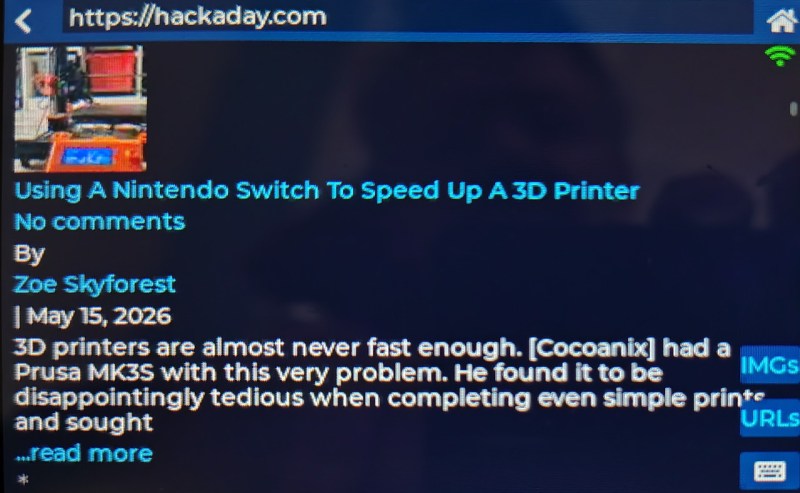
At the Hackaday Europe conference in Italy earlier in the year, we were shown a rather interesting device. The work of [Alun Morris], it was an ESP32-powered Cheap Black Display board, and it was running a web browser. Definitely an achievement.

Lest you imagine that it was sporting the latest and greatest in browser technology, we must disappoint you. The browser in question is a very basic text mode device, but it did happily retrieve Hackaday, which should be the only test a browser should need to pass.

Under the hood it’s running FreeRTOS, with separate HTML retrieval and tokenizing, and UI processes. It can fetch web pages directly, but there’s also a server-side proxy for difficult sites, and for creating image thumbnails.

An ESP32 is a powerful microcontroller, but it’s fair to say it’s not in the league of running a web browser and as far as we can remember this is the first one we’ve seen. We’re sure it’s a field with further progress to be made though, particularly with the more powerful recent chips in the series. This project however is a good start, and more importantly it can be yours for a few dollars on Ali to buy a dev board. What are you waiting for?


Tuesday, July 28, 2026

Improving the Microcontroller Gaming Performance with PicoGame

July 28, 2026 0
Improving the Microcontroller Gaming Performance with PicoGame

The ability to write Python on microcontrollers with the likes of MicroPython and later CiruitPython has made them much more accessible. [MakerClassCZ] brings that to game development with PicoGame.

Like any good project, it starts with a problem that needs solving. Put simply, the existing CircuitPython libraries aren’t too impressive for gaming. The DisplayIO library tends to do full display refreshes, which are slow on such tiny displays, and the Stage library just wasn’t flexible enough for [MakerClassCZ]’s liking. So he built his own.

PicoGame, like the others, implements the performance-sensitive things in C, but does partial updates for the screen, on its own massively increasing the framerate. On the other end, it uses fixed-point math–much cheaper than soft-float–and makes an active effort to keep the RAM usage low so Python can have it. What’s even more clever is using the downtime between sending one tiny portion of frame to calculate the next just in time.

Of course, the display is still the limit. If you need to update a lot of it, you might end up with 10 FPS if you’re lucky. But if you can settle for less motion, you could see 100.


Why Is Textile Work Not Taught To Engineers?

July 28, 2026 0
Why Is Textile Work Not Taught To Engineers?

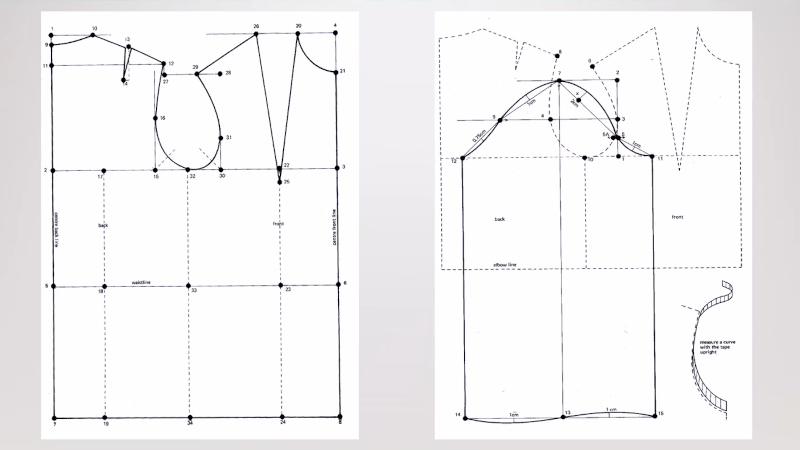
A talk from the recent Electromagnetic Field event in the UK caught our eye, in which [Amy Jeskins] looked at the overlooked engineering skill of pattern cutting. She takes us through the mechanics of creating a pattern for a piece of clothing, and asks why it is not a skill taught to engineers.

She’s a specialist in theatrical costume, and the talk takes us through some examples of her work before looking at the history of tailoring and pattern making. She explores flat cutting and draping a pattern on a form before coming into the present day with CAD packages designed for clothing work. It’s the social aspect of the talk that’s perhaps the most interesting, looking at how it has become a gendered skill and thus not something considered where it should belong, as engineering. We’re reminded of one of the most important additions for a healthy hackerspace, a textile room, as we’ve seen people there bridge this divide from both directions.

If you have never made a piece of clothing then we’d suggest giving this talk a watch, and maybe taking up a sewing machine to give it a try. In the past we’ve taken you through some of the prerequisites for a textile bench. The full talk is below the break.


Samsung’s SmartThings API Terminates Free Access

July 28, 2026 0
Samsung’s SmartThings API Terminates Free Access

If there’s one constant in the world of commercial home automation solutions, it is that of decreasing availability and higher costs as time goes on. So too with Samsung’s SmartThings, the API of which will cease free access in October of 2026.

While this does not affect people who use the SmartThings app, any system that relies on access to this API will soon face a $4.99 per month fee for non-commercial users, with various commercial tiers also in the pipeline. While the rest of the blog post has all the elegance of the output of a ‘please generate a list of plausible excuses’ query to ChatGPT, the most likely reason is that offering free services after the sale of an Internet of Things device will never be profitable.

SmartThings was originally a 2012 Kickstarter campaign that ended up becoming successful enough that the company was bought by Samsung in 2014. Its current offerings are very much like other so-called Smart Home products, with recently support for Matter and thus interoperability with third-party devices added.

If you have SmartThings integrated with your Home Assistant installation, you are also likely affected by this change if at any point you use the API. Of course, this isn’t the first time that SmartThings customers had to scramble to fix broken infrastructure, such as when in 2021 the original hubs got discontinued.


Sharkfin Bites Attack Shark

July 28, 2026 0
Sharkfin Bites Attack Shark

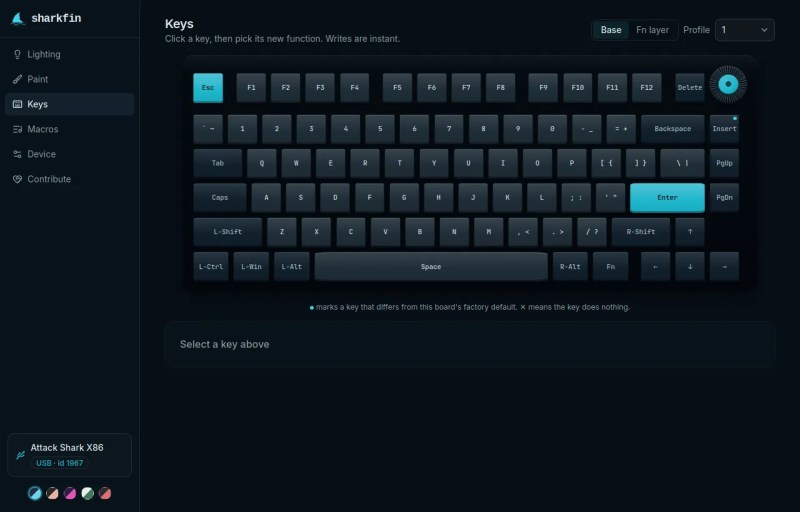
The Attack Shark is a modern keyboard with fancy magnetic keyswitches, macros, configurable blinky LEDs, and more. The problem is that the configuration software only works on Windows, so [JR Lanteigne] set out to fix that. Along the way, he completely worked out the configuration protocol that this keyboard needs, and wrote the comfortable sharkfin web-app so that you can flash yours too.

Don’t have an Attack Shark? Well, you might have one of the 522 other boards that are made on the same ROYUAN hardware, but are re-branded under 100 different names. Want to find out if yours is supported? Look it up in the list here, or just plug it in and find out.

[RJ]’s path to reverse engineering the config protocol wasn’t entirely straightforward, but since the “Windows only” application was actually an Electron app under the hood, he patched it to run on Linux and logged a few configuration sessions. Of course there are gotchas like two different firmware generations and the fact that writing to flash too fast put the keyboard into a boot loop, but after these problems were surmounted, it just remained to map all of the bytes out, and wrap it all up in a user-friendly application.

We don’t have one of these fancy-schmancy keyboards, but if we did, we’d certainly be glad to have the configuration protocol documented. Nothing is worse than finding out that the company that made your keyboard has gone belly-up, and you’re left with a backlight setup that doesn’t match your new deskpad. If you’re a keyboard-head and you don’t already follow [Kristina]’s series, well you should.


Monday, July 27, 2026

Reviving a Retro Mouse with BlueTooth low Energy support

July 27, 2026 0
Reviving a Retro Mouse with BlueTooth low Energy support
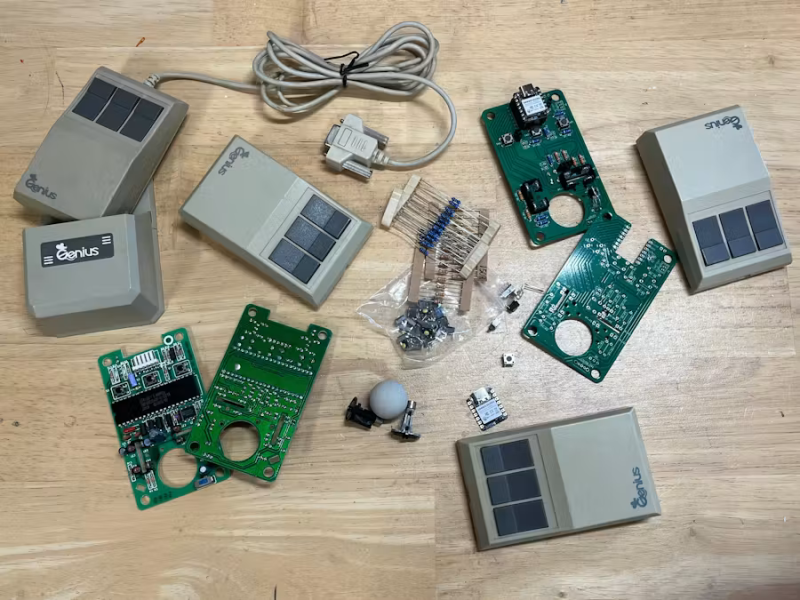
Several mice and their internal electronics

One of the disadvantages to collecting retro peripherals is that they’re not necessarily easy to use anymore. [eSPee77] changes that by retrofitting a Genius GM-6000 mouse with modern hardware, all while preserving the feel.

To make this mouse without compromising on the feel of the original, means replacing the PCB with a new one while retaining the same buttons and encoders. So [eSPee77] did exactly that. At the heart of the conversion lies an nRF52840 on a custom PCB. It uses new optical sensors to read the existing quadrature encoders, and uses the same type of switch for the mouse buttons as the original.

But from there, it diverges because–powered by the BLE capabilities of the nRF–this is actually a wireless mouse! And the modern features don’t end there, either. To support scrolling on a mouse which did not originally have it, you can press the middle mouse button while moving it forward/backward. Finally, as the cherry on the cake, it features an “air mouse” mode using an inertial measurement unit, handy for use in presentations.


Regain Some Trust in Unknown USB Drives

July 27, 2026 0
Regain Some Trust in Unknown USB Drives

For how useful USB thumb drives are for quickly toting around and copying files from one computer to another, they can be a bit of a security headache. Programs can be loaded on them with all kinds of malware; they can be obscured in some ways that are difficult to detect, and they can be set up to execute certain programs when they’re plugged in. The general wisdom is to simply avoid untrusted USB devices completely, but that sort of abstinence-only policy rarely works in the real world. If, for some reason, an untrusted USB device absolutely needs to be used, many of these security issues can be mitigated with this tool.

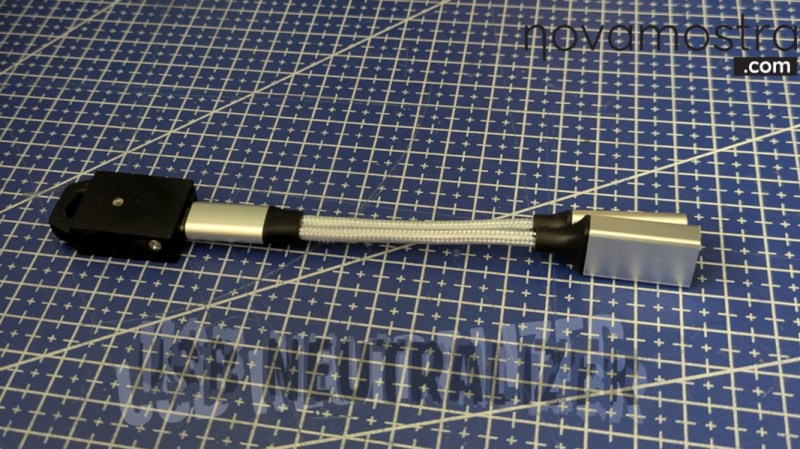
Built by [Novamostra], the device is simple on the surface: it’s a Raspberry Pi Pico mated to a 2-in-1 USB splitter cable. But with the USB Neutralizer software they have written loaded onto the Pico, it automatically destroys the ability of any connected USB thumb drive to load files. The program works by deleting the first and last 34 Logical Block Addressing (LBA) sectors on the drive immediately when it’s plugged in, without doing anything else. This effectively corrupts the drive bad enough to prevent malicious software in the partitions from doing anything, allowing the user to (relatively) safely put the USB drive into their computer and format it for re-use. The code for this tool is also open-source and reviewable on the project’s GitHub page.

Of course, this isn’t a perfect security solution for all USB attacks. It doesn’t erase or replace the firmware on the drive itself, and although firmware-level attacks are rare they’re not out of the question for all users, all the time. It also won’t prevent a malicious physical attack like this high-voltage one, and it may also not stop hidden or obscured partitions or devices programmed for storage and some other nefarious purpose simultaneously, like a USB HID. But still, this solves a great many of the problems associated with getting new drives from semi-untrustworthy sources, like retailers or friends whose computer skills we don’t fully trust.


Flexible PCBs: Not Only For The Few

July 27, 2026 0
Flexible PCBs: Not Only For The Few

Flexible printed circuit boards are a fascinating technique for making electronics venture beyond the two-dimensional, but surprisingly they’re not something many of us have worked with. [Jessica Stanley] gave a talk at the recent Electromagnetic Field event in the UK, exploring the different ways to make your electronics bend.

She starts with an overview of flexible electronics, detailing the techniques used with conventional polyimide substrates and etched copper.  We’re particularly enamoured of a stretchable PCB made by coiling a flexible circuit round a piece of elastic. Since she’s looking for techniques accessible to everyone that don’t either cost a fortune or require dangerous chemicals we look at conductive paint and electrolysis, before arriving at using a vinyl cutter to create adhesive traces.

We’ve no doubt all noticed that flexible PCBs can be ordered from the usual fabrication houses at a price, but the value in this talk lies in reminding the viewer that this is not the only path. She demonstrates well that simple flexible PCBs can be within the reach of almost anyone, which is perhaps the encouragement needed for people to try this medium. The full talk is below the break.