Monday, August 3, 2026

Circuit Bending, But Make It MIDI

August 03, 2026 0

Circuit bending is a chaotic art. At its simplest, it can just involve making connections between random points on a circuit board to create weird sounds in musical hardware. Or, you can complicate things, get really specific with your hookups, and twist them with various sorts of modulation. [Simon the Magpie] has been working on something closer to the latter category, with his neat project to add MIDI to the circuit bending world. 

The concept is straightforward enough. [Simon] has created a device that you place in line with your circuit bent connections, particularly those that create pitch bends with pots thanks to their variable resistance. You can then play your MIDI keyboard, and the device will vary the resistance in the circuit and bend the pitch at your command. [Simon] simply calls the device MIDI TO RESISTANCE, because that’s… precisely what it does, with the aid of a digital potentiometer. He then demonstrates it doing its thing on pitchbent toys, and it sounds pretty radical in use.

If you’re trying to make your circuit bent toys and instruments more musical, this build should serve as a great inspiration. We’ve featured other oddball musical hacks in a similarly creative vein before, too—such as using mixers as a synthesizer in their own right. Have fun out there.



Child-Friendly Music Player Uses RFID

August 03, 2026 0
Child-Friendly Music Player Uses RFID

[David] has a young child who is clever enough to use a computer to play music, but he doesn’t quite want to hand over the mouse just yet. Thus, he set about building an electronic music player that could be operated in an altogether simpler fashion. 

The build is based around an Arduino Nano — its job is to read RFID tags via an RC522 reader, with the tags themselves embedded in a series of small dolls belonging to [David]’s daughter. Upon reading the tag, the Arduino Nano chats over serial with a DFPlayer Mini module, which reads a playlist of MP3 files off of an SD card and plays them over a small 4 ohm speaker that [David] had laying around. It’s a simple build, with the components all neatly wrapped up in a handsome wooden case with a volume control and a skip button for if any one song becomes too annoying for a repeat listen.

We’ve featured other builds in this vein before, too. There’s something satisfying about a music player with such a simple interface—no delicate media to fiddle with, just pop the toy on top and get the playlist you were looking for. If you’re creating your own little musical builds at home, we’d love to see them on the tipsline.


Congratulations to the Frikkin Laser Winners!

August 03, 2026 0
Congratulations to the Frikkin Laser Winners!

Apparently you all love lasers just as much as we do. We put out a challenge to use, build, or otherwise abuse our favorite coherent light sources, and you responded. Some of the projects had been in the works for quite a while and were ridiculously polished, some were whipped together on the fly just for the contest, and we truly enjoyed both.

We only have three $150 DigiKey gift certificates to give out, though, so without further ado, we present to you…

The Winners

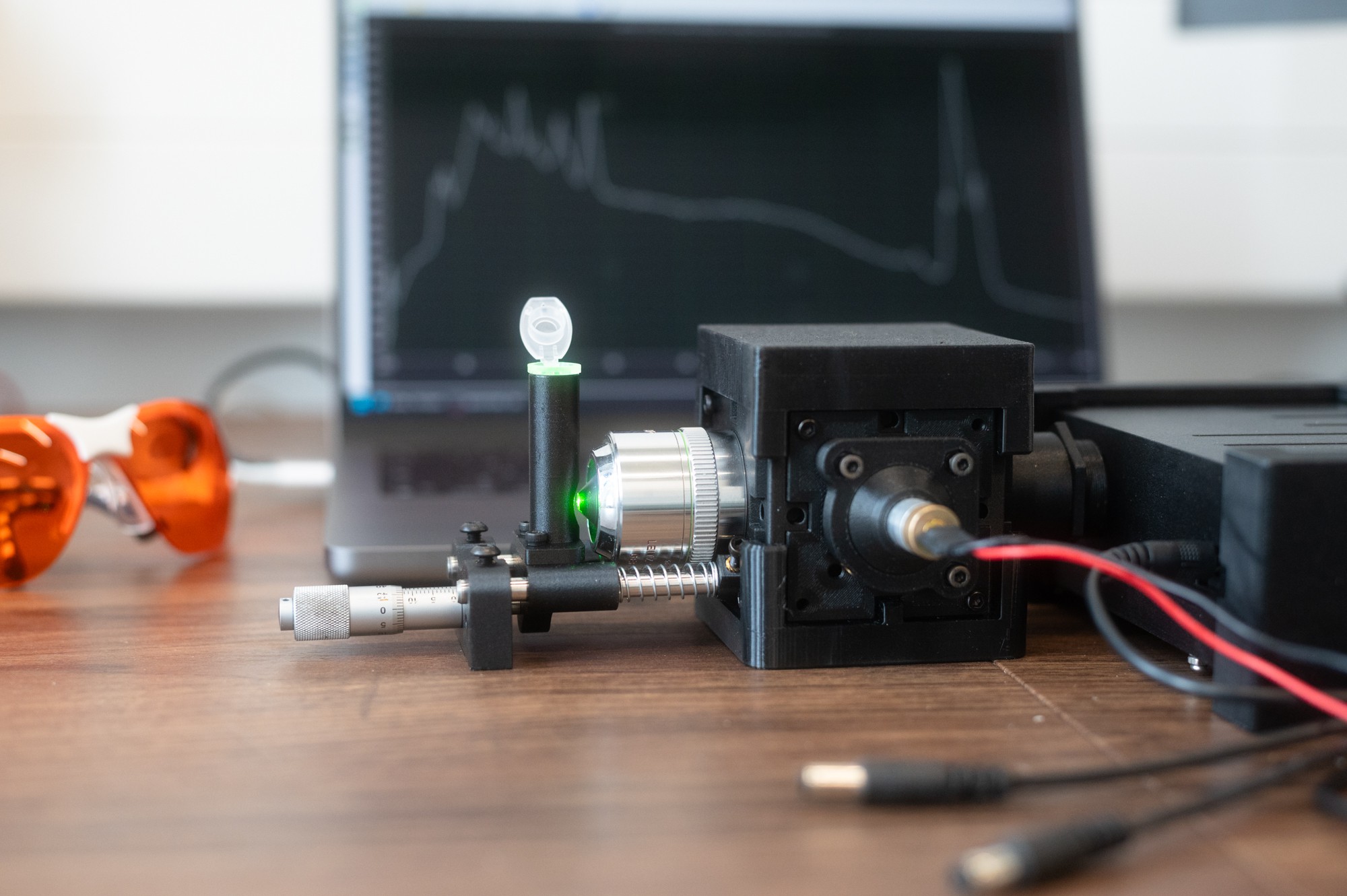
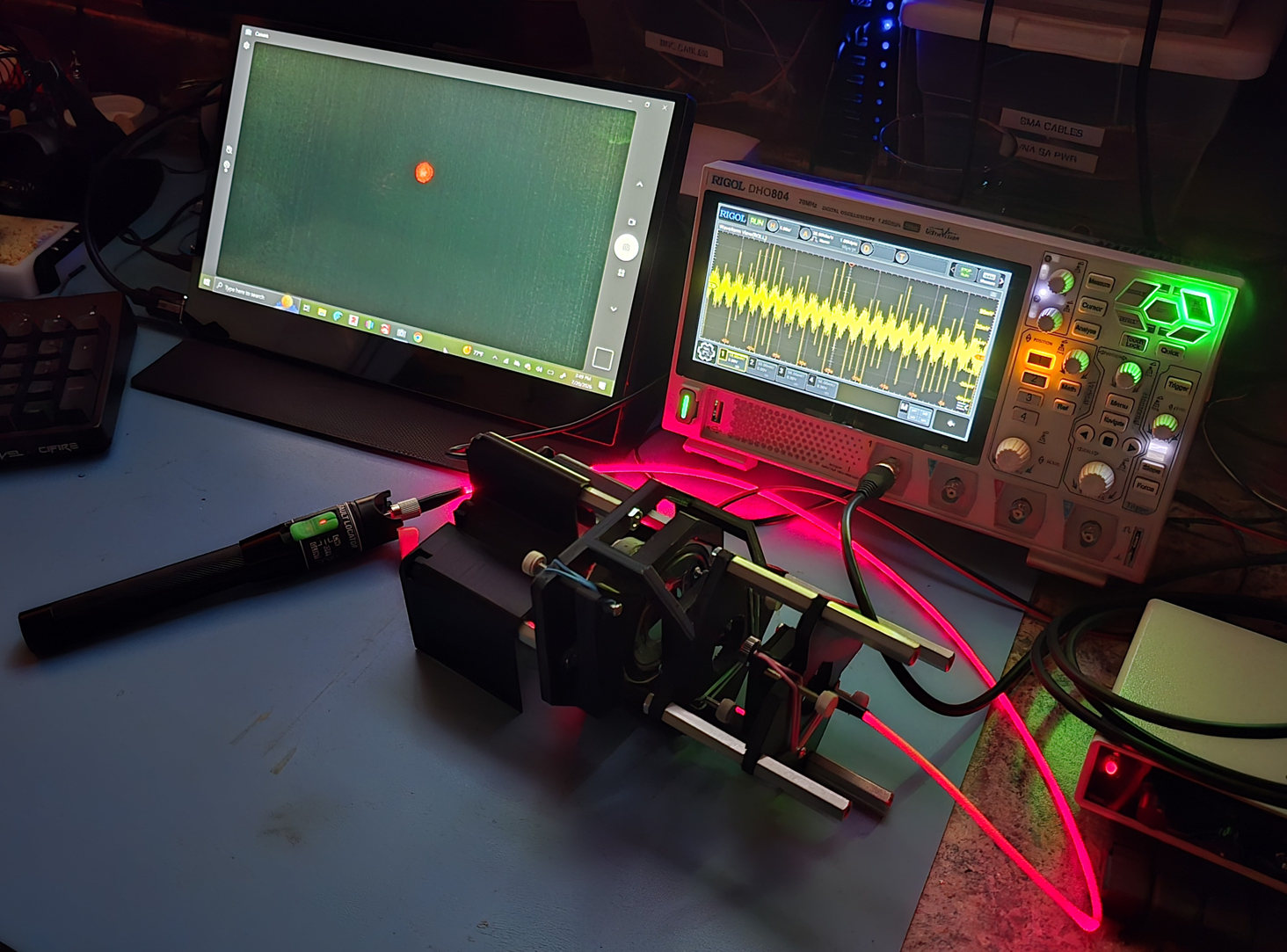
Our judges’ favorite project was [Jacob]’s CubeRaman, and it’s not hard to see why. A Raman spectrometer shines laser light at an object and catches the reflection, filtering all of the original laser wavelength out. What remains are photons that have interacted with electrons in the atoms that make up the target itself, and come back at a shifted wavelength. Comparing the spectrum of this Raman reflection with a database of known spectra tells you what it is made of.

This is by no means an easy project, but [Jacob]’s documentation, careful selection of parts to buy used and parts to build, coupled with a clever 3D-printed mounting system make it plausible for the home gamer. We love seeing out-of-reach science gear brought into reach, and we know we’ll be keeping an eye on this project in the future.

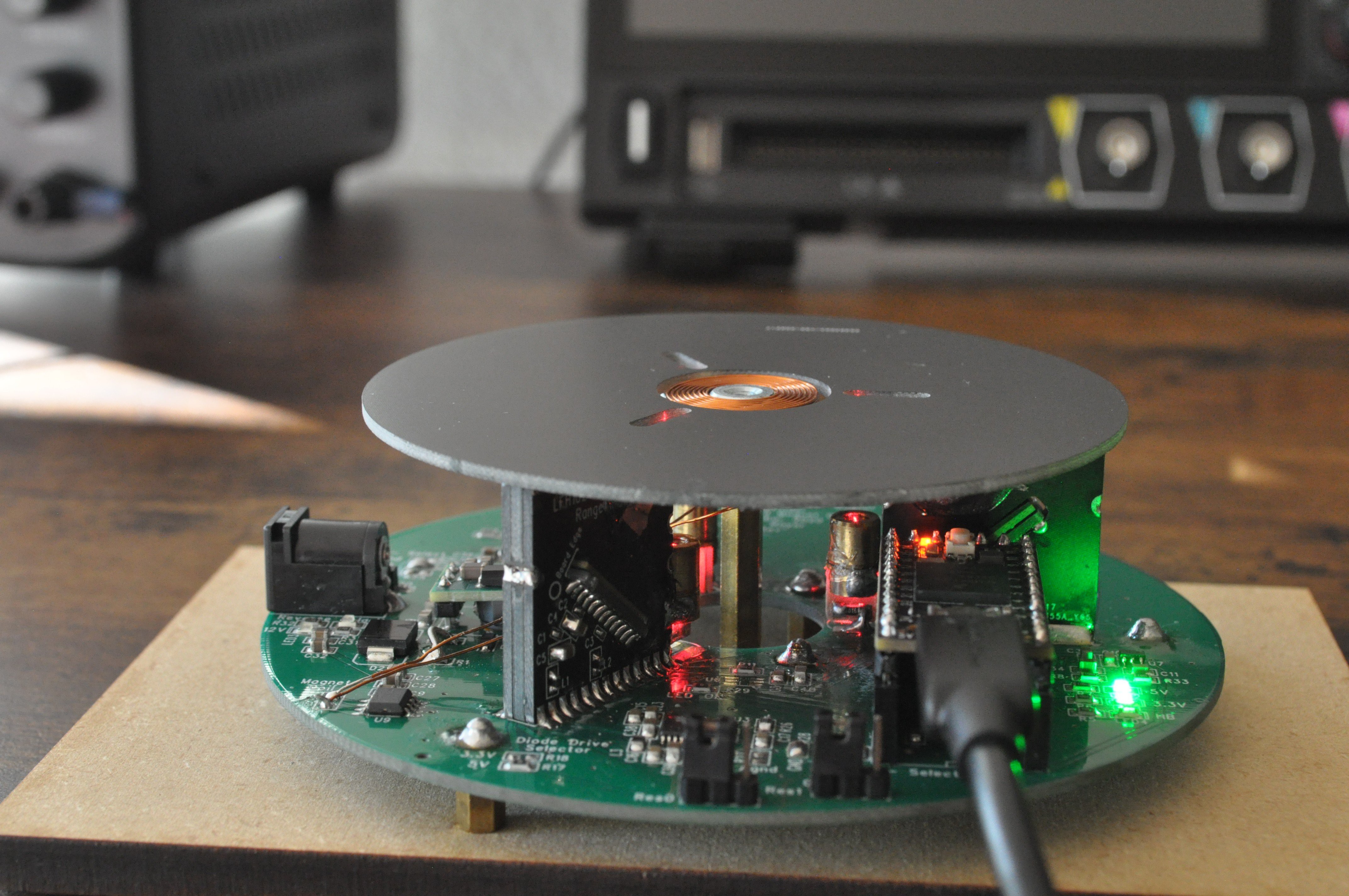
Next up, we had [Kyle Mayer]’s Measuring Microns with Lasers, which is a DIY laser rangefinder, but for measuring very small distances — under a centimeter — with precision. Like many laser optical rangefinders, this bounces a laser off the target and collects the light on a line sensor, using the angle at which the light returns to figure out how far the target is.

[Kyle]’s implementation uses three of these measurement heads and produces a reading that is precise down to 0.25 μm nearly 5,000 times per second. This puts it in league with devices that you have to request a quote for, so you probably don’t want to have to afford them.

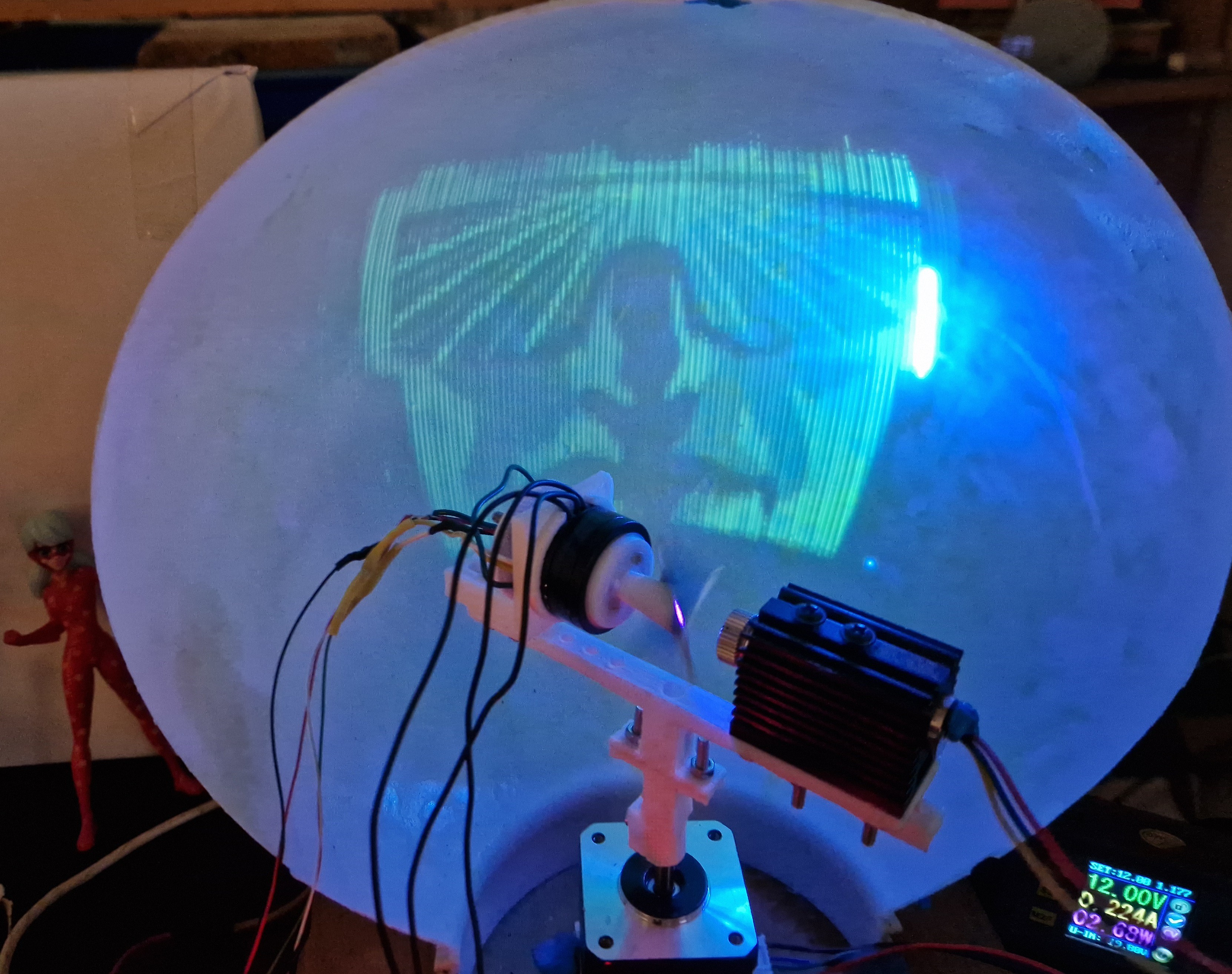
And finally, an art project! [AJRussell]’s Glow Engine is a beautiful take on a familiar laser trick: shining a blue laser at glow-in-the-dark materials to leave persistent traces. Scan the laser over the phosphorescent screen, and you have something like a CRT, only in [AJ]’s case, a very very slow CRT.

The beauty here lies in the details. [AJ] chose high quality strontium aluminate for the glowing, and used high resolution encoders and the open-source SimpleFOC motor driver firmware to get the spots in the right place. Snippets of old hard drive platters make fantastic mirrors. All in all, a super implementation that we’re pretty sure looks even better in the real world.

Honorable Mentions

We always come up with a few honorable mention categories to give you all some inspiration. And it also gives us a nice excuse to feature some more sweet projects.

Lightshow

We wanted to see pretty displays of laser light. [Daniel Ross]’s Laser Oscilloscope 360 not only draws out pretty waveforms, but it does so in prime steampunk style. Both [Owen Trueblood]’s Laser Cyanotypes and [GRNCH]’s Scored: Laser Woodblock Prints flip the script, making beautiful images from lasers, but not the way we intended. Kudos.

DIY

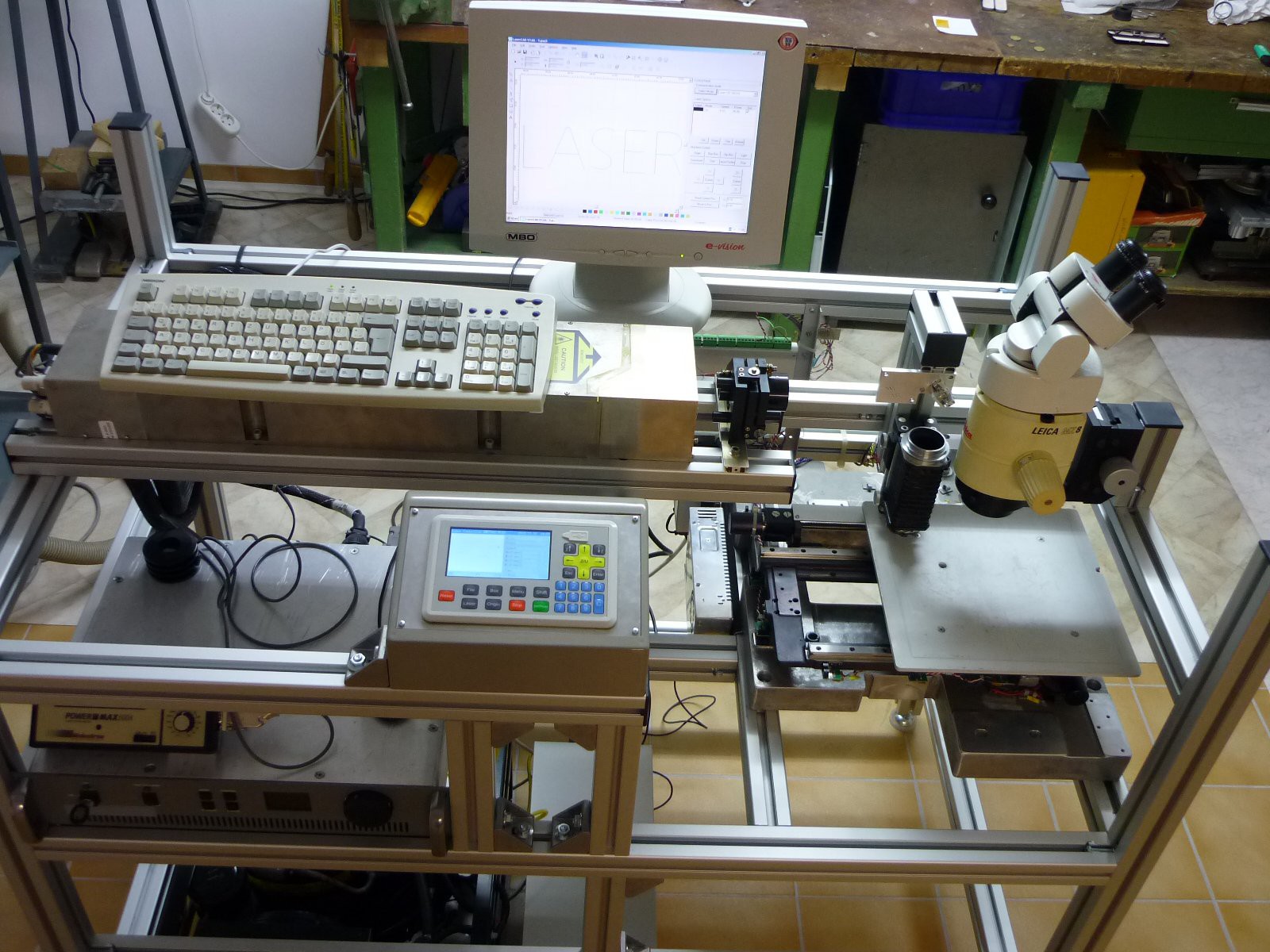
We wanted to see what laser-involved projects you were building yourselves, from scratch. While we were shocked that we had no TEA laser entries, [Armin Bindzus]’s Versatile Laser Processing Machine more than made up for it. It’s a pulsed-laser do-everything machine that we’re absolutely jealous to see made real. And if you don’t think there’s some real laser DIY going on here, you’ve never maintained a q-switched diode pumped Nd:YAG laser.

With Remaining Eye

This was our catch-all category for doing basically anything else with lasers. It turns out that what you all mostly wanted to do was science. [Matt Venn] used a fast-rise-time laser driver to Measure the Speed of Light at Home, and got damn good results considering the 2 m baseline. [Tim] put together a 3D Printed Optical Cavity interferometer on a budget.

But it wasn’t all labcoats and pocket protectors. [WeldingRod1]’s Laser Bandsaw is basically as bad an idea as it sounds like it is. Please, please wear eye protection!

Thanks again to DigiKey for sponsoring the contest. We’re sure that our winners will find whatever they need for their next laser project.


New File Manager is C64’s Answer to Norton Commander

August 03, 2026 0

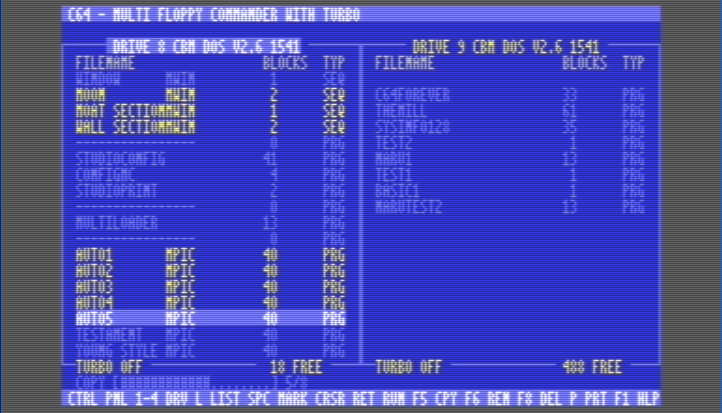
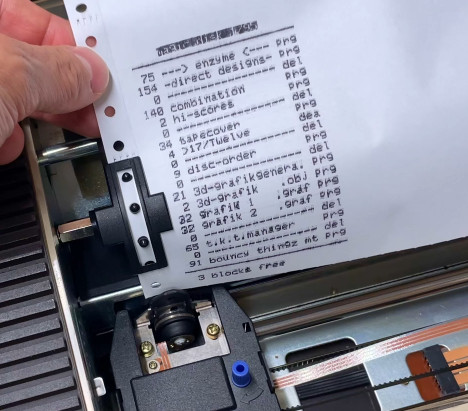
Norton was always a PC company — Norton Commander, the file manager that launched a thousand clones, was only ever available for DOS, like the rest of the company’s offerings in those days. If they’d decided to port it to the C64, though, it would likely look a lot like [retro3872809] aka [Chicken 64]’s Multi Floppy Commander with Turbo, available on GitLab.

As you might be able to see on the screen shot above or in the demo video below, the application provides an 80-column interface with a split view to show a pair of floppies side-by-side. Not that you’re limited to two floppies, however. The software is happy to swap between all the drives on the bus, to the C64’s maximum of four. All four drives will be usable since the file manager lives on a cartridge.

All drive models are supported, though not all have turbo. As a file manager, it looks like it has the normal functionality you’d expect: renaming, copying, moving and deleting files and directories. You can also launch programs or print disk listings, assuming you have a printer attached to your Commodore.

Said Commodore perhaps needn’t be vintage, as they’re selling new ones again, but if you want a disk drive you may have to fix it yourself.


Sunday, August 2, 2026

Easy Theremin Uses ESP32

August 02, 2026 0

The Theremin is that classic electronic musical instrument that makes those weeee-ohhhhh noises which were so popular in mid-century science fiction movies. Mid-last-century, that is, because this century is just beginning. In any case, you could build one with old-school analog electronics, or you could go a more modern route, as [ericCycles] did.

The build relies almost entirely on an ESP32 microcontroller with minimal supporting circuitry. Like any other Theremin, pitch and volume are controlled by moving hands closer or farther away from two antenna. In this case, the ESP32 uses its capacitive touch circuitry to detect effectively detect hand proximity to the two antenna in question, and uses those values to control the pitch and volume of a synthesized waveform. That waveform is then pumped out over the onboard digital-to-analog converter for playback on external speakers.

If you want to build a simple Theremin-like instrument quickly and easily, it’s hard to beat the simplicity on offer here. We’ve featured some other fun variants over the years, too, like this version that uses time-of-flight sensors for the human interface.


Hackaday Links: August 2, 2026

August 02, 2026 0
Hackaday Links Column Banner

About a month ago, we brought you word that the commercial rescue mission designed by Katalyst Space to save NASA’s Swift gamma-ray observatory had reached orbit and early indicators were looking good. Unfortunately, it didn’t take long for things to start going sideways, and up until very recently, the situation seemed pretty dire. But according to an interview with Katalyst’s CEO published yesterday by Ars Technica, the company has made some impressive progress on getting things back under control.

For reasons unknown, the robotic vehicle started tumbling out of control last week. Shortly after that, mission controllers lost contact with Swift. After 24 hours without contact from the ground, the spacecraft automatically performed a sort of “hard reset” in an attempt to regain communications. That got it talking again, but somewhere along the way the craft overheated, which in turn cooked the control circuitry for the reaction wheels, which would usually be used to control its orientation. Not great, not terrible.

As of yesterday’s update, we now know that engineers have figured out a way to gimbal the thrust from the craft’s xenon-fueled electric thrusters — which were originally intended for orbit-raising — to counteract its spinning. It’s slow going as these thrusters don’t have a lot of kick, but it seems to be working. We’ll keep an eye on this one and let you know when we know more.

Katalyst isn’t the only company producing a robotic savior with an uncertain future. If you enjoy starting the day with some freshly prepared eggs, but never quite mastered the skills required to make them, the Efficient Gastronomic Operational Robot (EGOR) may be for you. The $400 countertop gadget, which can be had for 50% off during the Kickstarter campaign, can not only crack the eggs for you, but can cook them to whatever style you wish. It even has the ability to start the process at a specific time, say a few minutes before your alarm goes off in the morning.

There’s a certain Jetson’s-like appeal to EGOR, but it’s hard to imagine there’s a huge market for a $400 “robot” that’s only function is to cook eggs. At the same time, we don’t think comparisons with the disastrous Juicero Press are entirely accurate. What doomed the Juicero, beyond the $700 price tag, was the fact that it was only capable of squeezing juice out of proprietary pouches that needed to be purchased separately. If you could have put whole fresh fruit into the machine and it could have automatically rendered it into juice, as you can put eggs from the grocer into EGOR, it probably would have stayed on the market for a bit longer.

All that being said, the end result is still going to be the same for folks like us. Eventually somebody is going to take apart an EGOR, and we’ll get to see what makes the breakfast bot tick. Then we just have to wait until these things start hitting the curb to see what the community can do with their guts. Maybe it will be as fun as our teardown of the Quirky Egg Minder.

On the subject of impending gadgetry, 9to5Google has released leaked images of what appears to be Google’s long-awaited answer to Apple’s AirTag. While the search giant has offered their “Find Hub” service for a while now, there hasn’t actually been an official first-party device to utilize it. All we know about Google’s offering is that it’s visually differentiated from Apple’s device thanks to its more oval shape, and goes by the highly imaginative name of “Google Pixel Tag.” More official information is likely to start appearing in the coming weeks, coinciding with the launch of the Pixel 11. We’ll have to wait a bit longer to find out when the company will decide to unceremoniously abandon them all, however.

Finally, we leave you with a recently uploaded video from the USS Cod Submarine Memorial that explores an area of the WWII Gato-class submarine that we had no idea existed, but which makes perfect sense in retrospect. Given the enormous number of vacuum tubes required by the submarine’s 1940s vintage radio equipment, and the vital wartime necessity to minimize the downtime of said systems, the submarine has a dedicated storage compartment specifically for tubes and other spare parts directly under the radio room. The radio operator could simply open a hatch at his feet, descend a small ladder, and have immediate access to shelves full of the parts he would need to keep his station up and running.

Of course, modern naval vessels will have stores of critical spare parts as well. But the unique storage and organization requirements of vacuum tubes, combined with the near certainty that some number of them would need to be replaced while the submarine was on patrol, meant they needed to be kept close at hand at all times.


See something interesting that you think would be a good fit for our weekly Links column? Drop us a line; we’d love to hear about it.


An Automated Water Tank Controller

August 02, 2026 0

[Jumpor] lives in a part of India where the water infrastructure is a little frustrating to use. Water gets delivered to underground tanks outside of homes, and must then be regularly pumped into rooftop tanks prior to use inside the building. Typically, this pumping is handled manually—by switching on a pump and running it until water comes out of an overflow pipe to indicate the rooftop tank is full. [Jumpor] decided to improve this wasteful and time consuming process with a little automation project.

The build is based around an ESP32 microcontroller. It’s hooked up to an ultrasonic sensor which can measure the water level inside the rooftop water tank. When the sensor detects the level descending below a set point, the microcontroller fires a relay to trigger the lift pump to fill up the tank. Once the sensor detects the tank is full, the pump is shut off, saving liters of water compared to waiting for water to pour out of the overflow as an indicator of the same.

It’s a simple enough project, but [Jumpor] was sure to include the important practical considerations. Since the rig was being installed in a rental, it was desirable to not make any permanent modifications to the water system. Thus, a fresh cap for the water tank was modified to host the electronics and level sensor, such that the original could be replaced at a later date. Due consideration was also paid to things like avoiding crossing the minimum detection threshold of the sensor, which could lead to accidental overflows if not managed correctly.

The aim of this project was to ease the day to day burden of maintaining a basic utility. That’s the sort of project we love to see around these parts.