Monday, August 10, 2026

Functional Jumping Pokéball from an Ancient Pokémon World

August 10, 2026 0

When playing a game about Pocket Monsters, there’s one thing you can’t avoid using no matter what you do, and that’s a pokeball. Whether it’s a new or old game, you can’t avoid it. Many from different generations or spin-off games have their own fun spin, and that’s what [Kiara] wanted to explore with her custom made replication of an older style of ball.
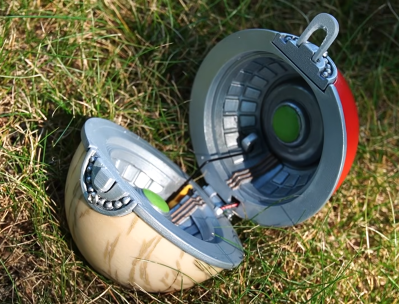
While beautiful on the outside from [Kiara]’s fine maker skills, it stands out compared to anything your kids might have from the functionality. In game the ball is able to shoot out smoke and even jump after catching something. These are both elements that [Kiara] was able to bring into her own design. Even adding some auto-opening and closing features, the ball exhibits everything but the ability to actually catch your friends.

While this project might focus on bringing something from the digital world to the real world, Pokémon has had its hand in doing the same. However, what if that thing gets stuck in the real world and needs to be brought back? Well, you should see how another hacker saved their Pokémon from a PokéWalker into the game world!



Sunday, August 9, 2026

Retrotechtacular: A View of the Moon from 1964

August 09, 2026 0

If you didn’t live through it, it is hard to understand how excited the general public was about the race for the moon. You can capture some of it by watching “Lunar Bridgehead,” a film about JPL monitoring the Ranger spacecraft as it hit, rather hard, on the lunar surface.

The Ranger program had been plagued with problems. The first five didn’t make it to the moon. Ranger 6 hit the moon, but failed to start its cameras. Ranger 7 was the first successful mission. There would be two more successful missions before the end of the program.

Honestly, given the state of technology and computers in those days, it is a miracle they could do it at all. Even more sobering to think that a scant five years later, Neil Armstrong would set foot on the lunar surface. In fact, Ranger 8 would land in the Sea of Tranquility, just like Armstrong’s Eagle.

The video has a lot of cool shots of old tech: magnetic tape drives, teletypes, paper tape readers, and giant dish antennas. The six onboard cameras even had to warm up, something unfamiliar to those who have only used modern electronics.

Of course, the cameras didn’t survive the crash, and that was expected. By today’s standards, the images are crude, but in 1964, they were nothing short of amazing.

Turns out, landing on the moon is harder than people think. Even with modern tech.


Hackaday Links: August 9, 2026

August 09, 2026 0
Hackaday Links Column Banner

Bad news for anyone who was hoping for some relief from the memory shortage — Digitimes is reporting that the production capacity of major players such as Samsung, Micron, and SK Hynix has already been booked for 2027 due to record demand. Their industry sources indicate that what we’re experiencing currently is just a prelude to when things get really ugly, which is why customers are paying a premium to lock in their orders so far out.

Although there’s been no official word from either side of the transaction, the Digitimes article further points out that these sort of agreements are usually 3 to 5 year contracts. If that’s the case, and nothing changes in supply and demand equation, we could be in for a very rough ride. There’s a potential opportunity here for other manufacturers to step in and start producing DRAM, possibly even focusing on lower-performance offerings intended for the consumer market, but setting up those production lines isn’t going to happen overnight. It’s always possible the AI bubble could pop in the next couple of years, but we’re not sure we’d put money on it.

There’s a developing story this weekend about the breach of customer data over at Framework. The maker of modular and repairable computers has recently sent an email out to all customers that their names, email addresses, phone numbers, and physical addresses were leaked due to an upstream zero-day attack against database provider Metabase.

Metabase disclosed the breach on August 3rd, but we were mildly surprised to see that Framework doesn’t seem to have made any public acknowledgement of the event so far. As far as we can tell, the only reason there are copies of the email from them circulating online is because several customers posted it to social media. In their statements to sources such as TechCrunch, Framework reps were also hesitant to give hard details such as how many customers were impacted. While we’re fans of what Framework is trying to do in terms of hardware customization and repairability, we have to admit that being cagey about this sort of thing isn’t a good look.

If you’re looking to vent about this situation and others like it with similarly-minded folks, HOPE 26 will be the perfect place to do it. We’re just days away from the New York hacker con, and there are less than 150 tickets still available for anyone who’s still undecided about going. At this point, it seems likely there won’t be any ticket sales at the door.

Luckily, there’s no shortage of virtual tickets which will let you experience the event from the comfort of your own basement. Since their week-long marathon event during COVID, HOPE has offered a better virtual experience than most hacker cons, so ticket holders can look forward to more than just a YouTube link.

As reported by Neowin, developer Justin Marshall has ported Word for Windows 1.1a to Microsoft’s modern incarnation of the operating system on 64-bit hardware. Rather than running it in some emulator, Justin took the source code that Microsoft released back in 2014 and rewrote the bits that relied on the early 90s platform it was intended for.

While we’re not sure the lawyers in Redmond are going to lose much sleep over somebody hacking around with a 35 year old version of Word, it’s worth mentioning that the Microsoft Research License that the code was released under back in 2014 allows access to the source for personal use but specifically forbids redistribution.

To comply with the letter of the law on this one, our read on it is that this project should have been made public as a series of patches against that release rather than bundling in Microsoft’s own code. In other words, if you’re interested in this one, you might want to pull down a local copy now in the event it goes down the memory hole.

Finally, Word isn’t the only decades-old piece of software getting a new lease on life in 2026. This year marks the 30th anniversary of Quake, and to celebrate Bethesda has unveiled a new chapter for the seminal first person shooter. Titled Dawn of the Machine, the update was created by a group of developers within MachineGames, who have not only been responsible for the modern Wolfenstein games but also 2024’s critically-acclaimed Indiana Jones and the Great Circle.

Although Quake may be 30 years young, it’s still available on pretty much everything, so you won’t need to break out your old DOS machine to get in on the action. The announcement page says the free update is available now for all current and previous-generation game consoles, as well as PC.


See something interesting that you think would be a good fit for our weekly Links column? Drop us a line; we’d love to hear about it.


The Stages of Grief in Repairing a Trinitron Found in the Trash

August 09, 2026 0

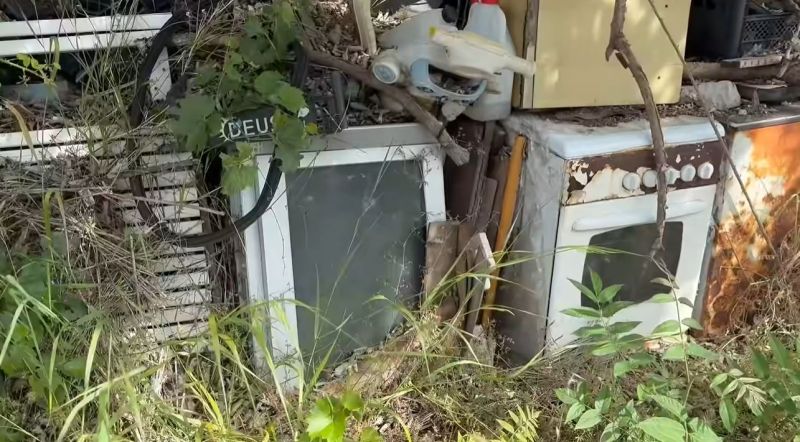
Sometimes you see a project just staring at you with proverbial puppy dog eyes and you just cannot look away. In the case of a once rather nice Sony TV it was the smooth 32″ Trinitron CRT that gave [Happychoice] that look when he came across it along the side of the road. Naturally he had to beg the owner of the junkyard to please let him adopt the pupp^Wjunked TV and attempted an ill-advised repair.

Some later sleuthing revealed that this poor TV had been sitting on the side of that road for at least six years, exposed to the worst that the Italian weather and local fauna could do to it, so it was no surprise that all he got out of it even after cleaning and some repairs was a sad triple-blink of the power LED. This indicated that something on the control board was very unhappy about the status of the power supply.

Over the course of a few months this project went correspondingly from careful optimism down to the depths of depression, through the fields of bargaining and into the blue skies of acceptance of a likely far more involved repair session than originally assumed. That said, the CRT itself looks to be in pretty good nick, as do the PCBs barring the few sketchy resistors that already got replaced.

We would like to congratulate [Happychoice] on the acquisition of a fun new repair project and wish him all the luck on bringing this beast of a TV back to life.


The Chinese Smart Glasses Proving that Smart Glasses can be Repairable

August 09, 2026 0

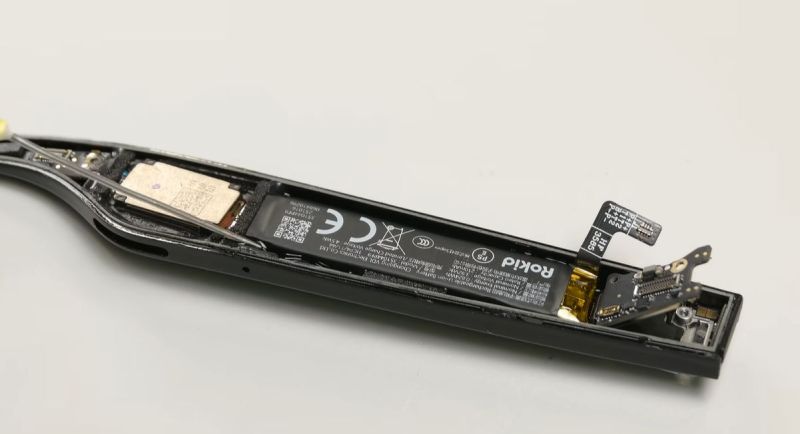
It’s often claimed that wearable devices cannot have user-replaceable batteries or even be serviceable at all due to how compact and waterproof they must be, yet there are plenty of examples belying those claims. So too for smart glasses with their compact size and the need to be fully waterproof. They would be certified e-waste as soon as the built-in battery stops being a battery, assuming these claims were true. Recently [iFixit] bought a few Chinese smart glasses to see just how repairable they are, with the Rokid one being very surprising.

The first nice feature of both two Chinese smart glasses is that they have an external battery that clips on in addition to an internal one. Internally they’re quite similar, both featuring a Qualcomm Snapdragon AR1 Gen 1 SoC with 32 GB of eMMC storage, in addition to micro-LED projectors.

Of the two glasses in the video, the Quark one isn’t that dissimilar from the Ray-Ban and Meta ones, requiring fairly destructive heat and prying to get inside. The Rokid one is however very easy to get into, with very light glue that makes it easy to get into, as well as a very servicing-friendly internal architecture including its battery. This is a pattern that extends to its external battery module, giving a glimpse at what such devices ought to look like in a repair-friendly world.

As is to be expected for an [iFixit] video, a significant part of it is spent lamenting the ills of glued-in batteries, including the recent decision by the EU to exempt many wearable devices from its new right to repair regulations involving built-in batteries. In light of the teardown of the Rokid smart glasses in this video, as well as previous Pixel Watch 4 and Fairbuds teardowns, it certainly seems reasonable to enforce user-replaceable batteries for these wearables as well.


Saturday, August 8, 2026

High-Density Parchment Paper Papertronics with Laser-Carved Hydrophilic Channels

August 08, 2026 0
High-Density Parchment Paper Papertronics with Laser-Carved Hydrophilic Channels

Paper as a substrate for electronic circuits is not very common, but promising for flexible circuits with low cost and easy recyclability. That said, paper is not an easy material to work with when printing traces, as the cellulose material is both absorbent and irregular, limiting the resolution and accuracy of so-called papertronics. Even when using higher-quality paper with wax-based masks this resulted in poor resolution issues, so [Zahra Rafiee] et al. opted to approach the problem from the other direction, by using hydrophobic parchment paper as the base combined with a laser.

The nice thing about the inks used with papertronics that they aren’t just traces, but can also be functional elements like resistors, which is also demonstrated in the paper. The channels for the inks are created using a 50 Watt CO2 laser, which etches away the silicone coating on the parchment paper. The achieved resolution in the article is around 250 µm for line widths and 300 µm line spacing, which is much better than that for wax-based alternatives.

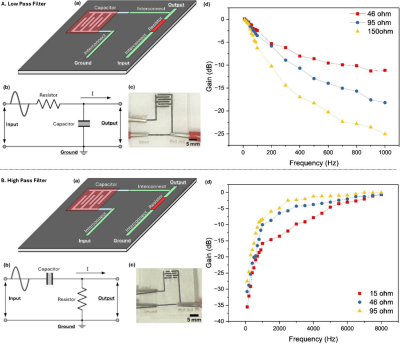
Providing conductivity in the inks was PEDOT:PSS, which, when mixed with dimethyl sulfoxide (DMSO), creates resistors. Capacitors can be printed by creating interlocking PEDOT:PSS ‘fingers’, with a Poly Vinyl Alcohol (PVA) based gel overlaid as electrolyte. These combinations were used to create RC low- and high-pass filters.

The degradation of these papertronic circuits was also tested, with them buried in soil under typical conditions. Only the silicone coating was rather immune to degradation. Since silicone is considered chemically and biologically inert, it’s claimed to not be an issue. For situations where such easy decomposition is not desirable, encapsulation with polydimethylsiloxane (PDMS) is offered as an option.


Track Bird Visitors With a Raspberry Pi and a USB Mic

August 08, 2026 0

Avian Visitors is a lovely project by [Teddy Warner] that uses a Raspberry Pi and microphone to keep track of which birds have been visiting your home, and creates a colorful illustration of recent visitors on top of it all.

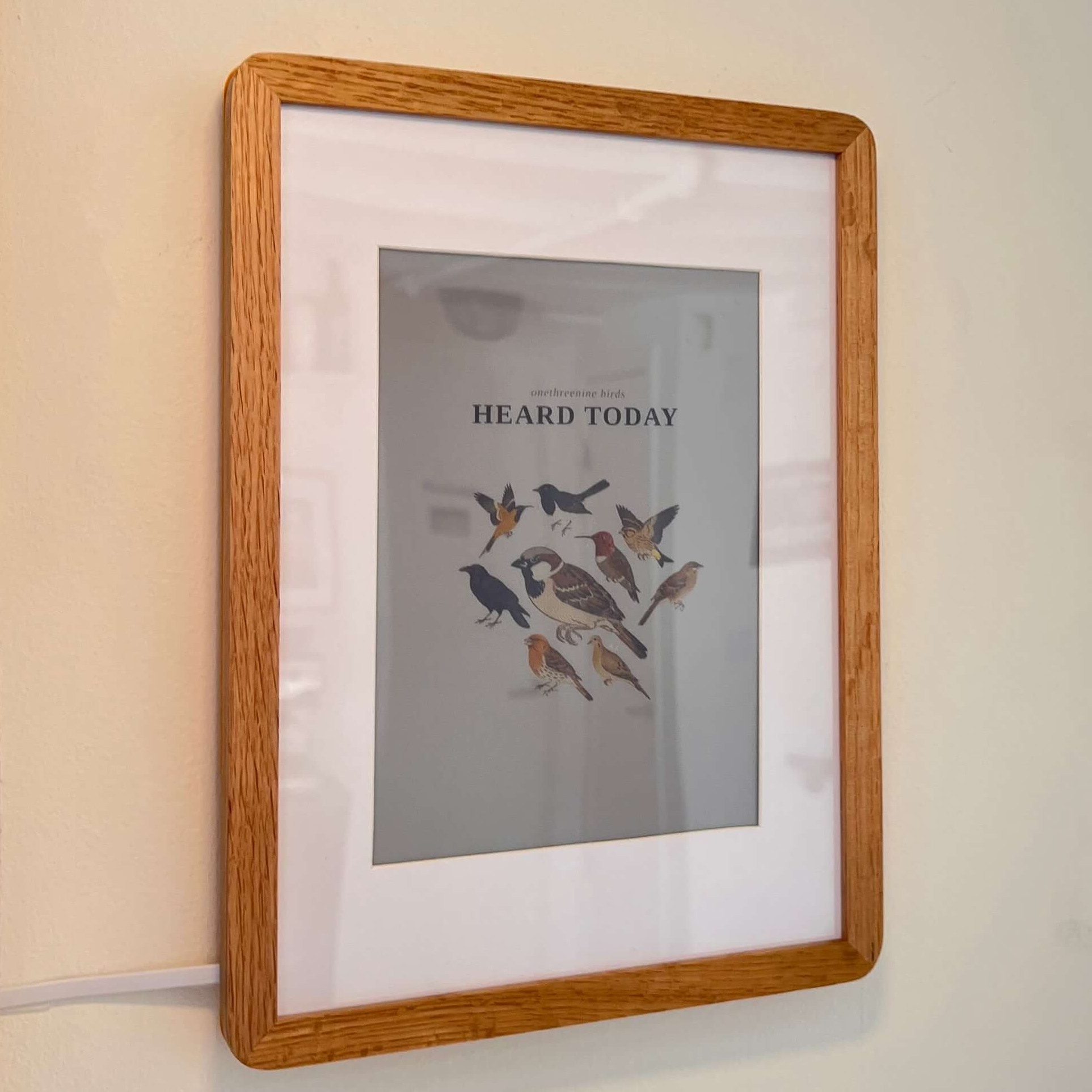
It reports on a web interface of its own making, but what really takes things to a new level is an optional, stylish E-Ink panel that shows the last 24 hours’ worth of visitors at a glance in a collage.

The key to identification is BirdNET (GitHub here), a deep learning classifier from Cornell that can reliably identify and classify more than 11,000 species worldwide based on sound alone.

Based on that information, the system pulls bird images from a reference set for the region and creates a collage representing the breadth and frequency of visitors in a single image. The larger the image of a bird, the more frequently it was heard.

That’s a cool project, but [Teddy] took things one step further by setting up a color E-Ink display to show a running summary of all the avian visitors the system identifies. [Teddy] has a knack for leveraging projects into wall-mounted art, as we saw with his generative art wall plotter.

Got ideas of your own? Avian Visitors even has options for sending the latest detection to Home Assistant or over MQTT, allowing automation triggers based on specific bird species. If you decide to try it out and put your own spin on it, be sure to let us know by sending us a tip!

The GitHub repository for Avian Visitors has everything you need to get set up, and the basic system needs little more than a Raspberry Pi and a USB microphone. There’s a build video embedded just below, so give it a shot if you want to get a better idea of what birds come visiting.