
Check one, two; check one, two; is this thing on? Over on The Public Domain Review [Lucas Thompson] takes us for a spin through sound, as it was in Britain around and through the 1800s.
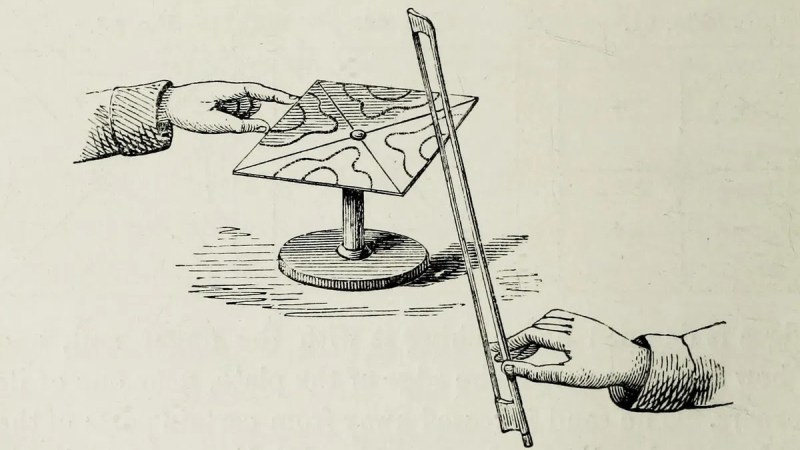
The article begins by introducing the Father of Acoustics, German physicist Ernst Chladni. After placing grains of sand on a thin metal plate and drawing a violin bow along one edge Chladni figures appear, making manifest that which previously could only be heard, that is, sound waves.
It’s fun to think that it wasn’t so long ago that the physics of sound was avant-garde. Middle class Victorian society was encouraged to reproduce cutting edge experiments with equipment in their own homes, participating in a popular science which was at the same time part entertainment and part instruction, for young and old alike. Throughout the rest of his article [Lucas] lists a number of popular science books from the period and talks a little about what was to be found within.
See the video below the break for a demonstration of Chladni figures from The Royal Institution. Of course the present state of the art regarding sonics is well advanced as compared with that of the 19th century. If you’re interested to know more check out Building A Wall-Mounted Sound Visualizer and Seeing Sound For Under $200.


No comments:
Post a Comment